

Introduction

When we began the discussion on developing the new Research Strategy 2026-2030, it seemed a long way off. Now as we bring you to the last Knowledge Exchange Newsletter of 2025, it gives us an opportunity to report and reflect on some of the things that have been happening, locally, nationally and internationally.
There is always a lot going on within social work and social care research and in the evidence world. In this edition we bring you up to date with some recent new items, initiatives and developments.
On the horizon in 2026 is our 13th annual Social Work and Social Care Research Conference as well as engagement and consultation on our new ‘Social Care Research, Innovation and Improvement Strategy’.
We hope that you find the range of information, news and updates in this newsletter relevant and do please take the opportunity to share with others.
If you want to sign up to receive this quarterly newsletter, click here.
Thank you to everyone who has provided us with updates and information on new initiatives throughout 2025. Do keep sending material so that the newsletter remains informative.
Yours sincerely,
Anne McGlade
Social Work and Social Care Research Lead
Social Care Council
Our news
13th Annual Social Work and Social Care Research in Practice Conference
The 13th Social Work and Social Care Research Conference is an annual event organised by the Social Care Council in partnership with the research community. It offers a platform in Northern Ireland for social workers, social care practitioners, people with lived experience and carers, policy makers and experienced academics and researchers, to engage with each other about research and evidence, and present research findings.
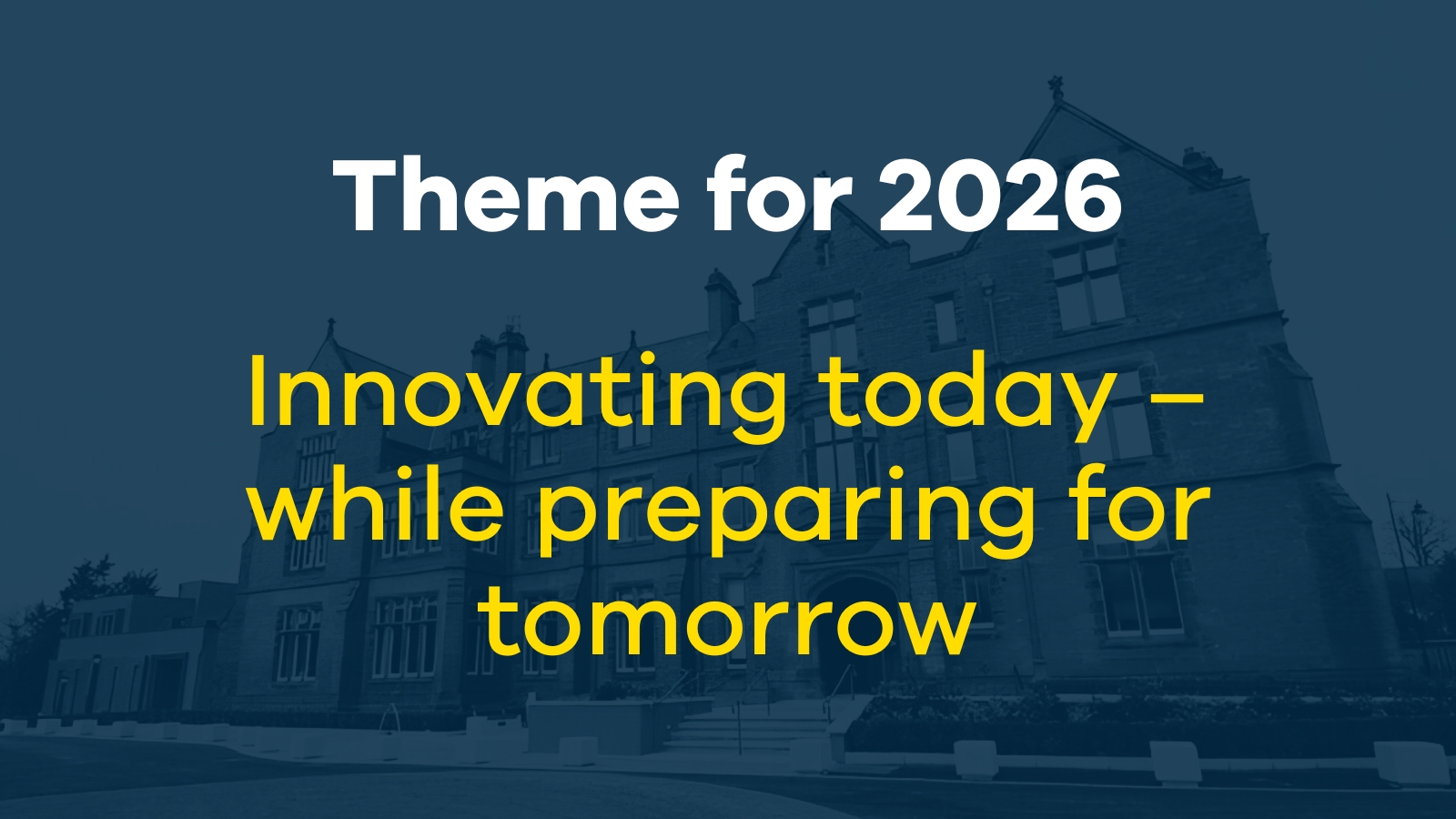
11 March 2026. All day Event.
Riddel Hall, 185 Stranmillis Road, Belfast, BT9 5EE.
The call for abstracts for the 2026 conference is now open – click here for more information.
The deadline for Abstracts is 5pm, 19 December 2025.
Registration for the conference will open January 2026.
Social Care Research Innovation and Improvement strategy – developmental activity
In the developmental work and writing of this strategy we have benefitted from the co-design and co-production approach taken when academics, people with lived experience and carers, practitioners and managers have worked together. We are grateful to the working group who offered their time and commitment to progress this work.
To help us better understand what we needed to consider when developing our new research strategy, we engaged an independent facilitator to help us engage in active listening sessions.
Two workshop events were hosted in May and September 2025 – you can find the reports of these workshops below.
This work has underpinned the development of our new five-year Strategy for Social Care Research, Innovation and Improvement – Igniting curiosity and inspiring change.
The September 2025 meeting also included an round table discussion, led by Lisa Morrison, an independent consultant with lived experience who had also acquired research skills.
The session benefitted from this expertise and explored how best we can move this agenda forward ensuring that issues of diversity, inclusion and belonging are integral to our way of working. We also explored the all-important question in research, who is missing from our conversations?
The session revealed an acknowledgement of the need for genuine outreach approaches and community engagement for any future activity in research priorities.
For example, in areas of social deprivation, it was suggested that people, haven’t necessarily the means or the interest in coming to us – we need to go out to communities to fully engage with them.
In the work ahead, we are committed to inviting and encouraging these voices throughout all our processes. This will add depth, relevancy, and nuances that could be missed otherwise.
Click on the links below to view both out come reports from May and September.
We will be engaging and consulting on the strategy in 2026, including considerations of equality and diversity screening.
Research Community Networking Group
The Research Community Networking Group, chaired by Helen McVicker of the Northern Ireland Social Care Council (the Social Care Council) and Professor Lisa Bunting of Queen’s University, Belfast remains one of the longer established and successful initiatives for social work and social care research and evidence since it was established in 2019.
Since then, membership has grown steadily to 75 members who meet quarterly, either face-to-face or online.
In light of discussions on diversity, the network will ensure it is meaningfully reflective of diversity, either through membership or through other creative approaches and contacts.
It is the willingness of members to network, engage and share research and evidence with others that contributes to the Network’s overall success.
All recent Networking Group presentations are available here.
If you are interested in finding out more, please email swresearchsistrategy@hscni.net.
“The true value of networking doesn’t come from how many people we can meet but rather how many people we can introduce to others.“
– Simon Sinek
PHD Network
As part of the strategic research infrastructure, the Social Work PhD Student Network was formed to allow PhD students to engage and support each other as they undertake their doctoral studies.
To find out more or join please email Dr Laura Doyle at: L.doyle1@ulster.ac.uk or Liz Tanner at: Liz.tanner@southerntrust.hscni.net.
Doctoral Level Scoping Survey
In September 2025 we conducted a scoping exercise to find out more about people undertaking doctoral level studies related to social work and social care, and about the research studies being conducted.
For the period 2020-2025 there are 34 students undertaking or how have recently completed doctoral level studies in a diverse range of topics.
Motivation for undertaking this level of study – in people’s own words:
“I am passionate about social work and helping others seeing first-hand how people experience stigma influenced me to look at my topic in more depth this in more depth”.
“In practice there were some questions that I could not answer so I wanted to explore further”.
“I am motivated by the opportunity to make a difference in people’s lives”.
“My motivation to go on to complete this PhD stemmed from a personal connection to the topic area”. (This was noted frequently across a diverse range of social work services)
“The Research and Evidence Methods programme at Ulster University opened my eyes to the importance and centrality of research to the social work profession, as well as the gap between practice and research.”
“My topic is an area of practice that is becoming increasingly prevalent and is under researched encouraged by academics to progress.”
“To contribute to the profession though utilising social work thinking and leadership”.
“Interest in evidence-based practice and an interest in delivering social work, education.”
If you would like a copy of the details, please email: swresearchsistrategy@hscni.net.
“The goal of education is the advancement of knowledge and the dissemination of truth.“
– John F. Kennedy
Other news
The 15th European Conference for Social Work Research
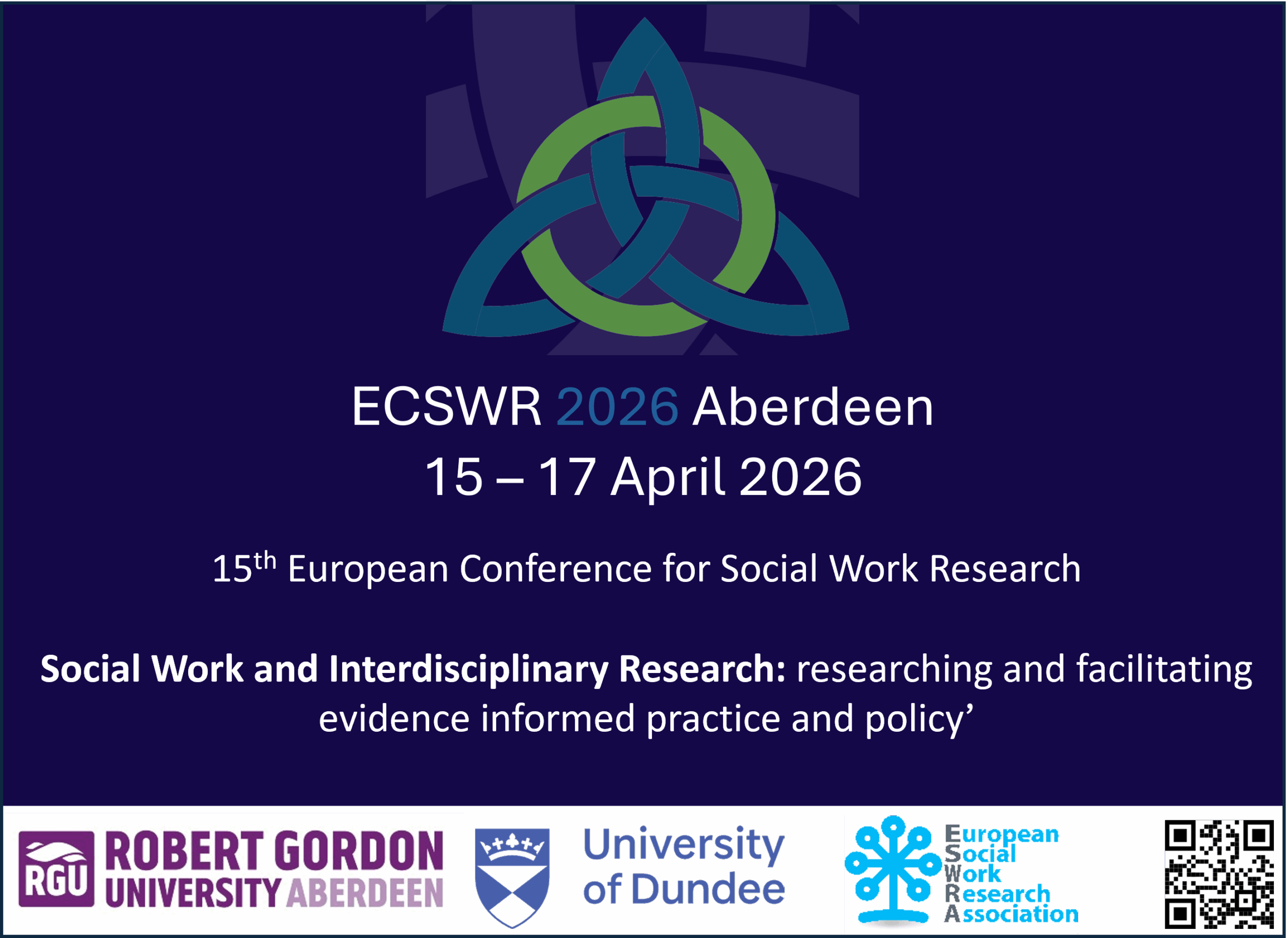
For registration details, click here.
ESWRA also hosts a number of Special Interest Groups, find out more information here.
Evidence into Practice Special Interest Group operates as one of a number of Special Interest Groups (SIG) of ESWRA – Check out our Evidence into Practice SIG here.
Fourth EIPSIG Online Seminar was hosted on 11 November 2025
Fourth EIPSIG Online Seminar was hosted on 11 November 2025 with an input by Dr Laurence Taggart from Queen’s University Belfast.
Until recently Laurence was Professor of Intellectual Disability Research and led the Centre for Neurodevelopmental and Intellectual Disabilities. His research over the last couple of decades primarily focuses on the health inequalities and inequities faced by individuals with intellectual and developmental disabilities in accessing healthcare services.
Of particular important to our Special Interest Group was Laurence’s most recent role at Queen’s University Belfast where he was appointed as Professor of Implementation Science.
Or if you would like to receive a copy of Laurence’s presentation slides, email: EiPSIG@hscni.net.
If you would like to receive a copy of our last newsletter contact the Convener Anne McGlade at: EiPSIG@hscni.net.
Developing Evidence Enriched Practice (DEEP)
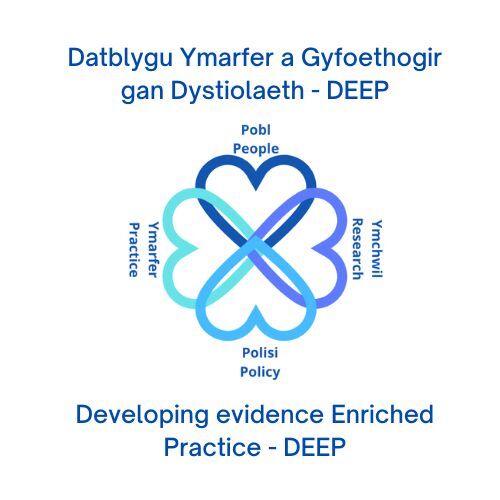
DEEP is a co-production approach to developing social care and health policy and practice. It uses story and dialogue methods to help gather, explore and use different types of evidence.
To find out more about the DEEP approach, click here.
Storytelling framework for social care in Wales
The framework can be imagined as a house with a foundation of ethical practice, three pillars of storytelling practice and a roof representing the overarching benefits of storytelling, click here for more information.
For further details, email: n.d.andrews@swansea.ac.uk.
Interested in Bringing Research Culture into Your Team?


Social Care Wales have been hosting a series of very informative seminars.
Engaging in research and practice collaborations: lessons from six adult social care capacity building partnerships. Funded by National Institute for Health and Care Research (NIHR).
These seminars explored issues related to embedding research in practice teams within social care.
- How research roles are being embedded within local authorities.
- Explore how these teams bridge the gap between research and practice.
- Lessons learned from co-production and scaling embedded approaches.
- Importance of developing learning drawing on a range of experience/skill.
To cite this report: Kendrick, H., Towers, A., Hotham, S., Keemink, J.R. on behalf of the social care partnerships (2025).
For details on each of the projects, click here.
To find out more information and opportunities, visit the National Institute for Health Research website here.
Centre for Implementation Science (CIS) at Queen’s University Belfast


Centre to be formally launched in 2026
CIS@QUB can help shift the system from simply knowing what works to making what works actually happen by:
- Embedding implementation science into policy development.
- Providing expert guidance so policies are designed with feasibility, acceptability, readiness, and sustainability in mind from the outset (not as afterthoughts).
- Assessing organisational readiness and system capacity.
Another Centre for Implementation Science is located in Limerick. Click here for more information.

Save the Date
4 and 5 June 2026, more details will be issued soon.
University Limerick in association with Centre for Implementation Science, Queen’s University Belfast.
Title: Making it work The Practice and Power of Implementation Science.
Interested in any of the above? For more details contact Professor Laurence Taggart at laurence.taggart@qub.ac.uk.
Centre for child, youth and family welfare
About
Centre for child, youth and family welfare is an inter-disciplinary centre committed to developing new insights into the lives of children, young people, and families and the promotion of improved welfare outcomes and enhanced wellbeing. Members are primarily drawn from the disciplines of social work, psychology, law, education, and health and are closely connected with several international Research Centres focused on the welfare of children, young people, and families.
For information on how to join, please contact either Dr Mandi MacDonald at: m.macdonald@qub.ac.uk or Professor Davy Hayes at: d.hayes@qub.ac.uk.
News from the Social Care Council
Northern Ireland social care reform wins top European award for innovation
Level 2 Certificate in Safe and Effective Practice
Professional in Practice (PiP) Awards
Lunchtime seminar Resources
The #Yes2SocialWork campaign focusing on the Degree in Social Work has launched

Yes2SocialWork encourages people of all ages and from different walks of life to consider applying to the Degree in Social Work in Northern Ireland.
The campaign will run from now until the beginning of 2026 – you will see it on the Social Care Council website and on social media. It will contain information on where to study the degree and how to apply, as well as stories from social work students from every walk of life about their journey into studying the Degree in Social Work.
We also have a Campaign Resource Centre featuring flyers, social posts and more which can be found by clicking on the link. Please like and share any posts you see on social media.
Events
Learning, Development and Governance (Social Work) Conference
We have collated all the post training material into one interactive booklet. You will find videos of all the presentations, PDF copies of the presentations and other resources.
If you have any further queries, please reach out to the Learning, Development and Governance (SW) team by emailing us at: LDG.SW@westerntrust.hscni.net.
Further reading
Have your say on Personal and Public Involvement in Research

Involvement Matters – in association with the James Lind Alliance, is a regional approach that brings together the public, researchers, Health and Social Care professionals and members of the community and voluntary sector.
We want to understand how we can get more people involved in making decisions about Health and Social Care research across Northern Ireland. In turn we believe that this will strengthen diversity in research and help reduce health inequalities.
Margaret Grayson, member and Co-chair of the PIER NI (Public Involvement & Priority Setting Sub-Group) reported a great response.
Two roundtable discussions have been completed with seven people attending the PPI contributor roundtable discussion and five attending the researcher roundtable discussion. This bring the total number of responses to 262 people sharing their views and experiences.
- We have more than doubled the number of people who have taken part in the survey.
- We are pleased that we have people across different age categories.
- We have received good variation in terms of ethnicity and religion.
- A quarter of responses are from people with a disability and we have heard from people with al range of different caring responsibilities.
Alan McMichael PHA R&D is leading on this and when detailed work is completed on the analysis details will be released. Contact Alan at: Alan.McMichael@hscni.net.
“Research means that you don’t know, but are willing to find out.“
– Charles F. Kettering, an American engineer and inventor
Keeping Up to Date – Social Work for Healthcare Library – Library Guides at Queen’s University Belfast

Please visit the Healthcare Library and se the most recent articles and studies.
Hazel Neale is now taking bookings to visit teams in the autumn, please feel free to get in touch to discuss how to support your team’s information needs. Get in touch with her at: Hazel.Neale@southerntrust.hscni.net.
IMPACT – Improving Adult Care Together

In Northern Ireland, the University of Ulster is our partner hosted by Professor Deirdre Heenan. Each year we coordinate numerous projects which are led by passionate and experienced regional Coaches and Facilitators, promoting evidence-informed change and improvement. Currently we have four Senior Strategic Improvement Coaches: Amanda Barr, Barbara Campbell, Laura Doyle and Helga Sneddon. Our current Facilitators are Bekkah Bernheim, and Orla Fitzsimons.
Barbara Campbell is also our National Embedding Lead. This exciting new role will ensure local learning and change contributes to the development of NI, and UK, policy and practice, so that what we learn locally is embedded in how social care develops across the UK.
Read more about Adult Social Care Projects here.
University College Cork – Practice Links

Practice Links is a free @UCCsocialwork publication for practitioners working in Irish social services, voluntary, community and non-governmental sectors. Practice Links supports practitioners to keep up-to-date with new publications, electronic publications, conferences, social media, apps, and continuing professional development opportunities. Practice Links is published every other month.
Click here to view the most recent issue.
If you have anything you would like to share with colleagues through Practice Links (events, publications, websites, reports, blogs, video links, new practice-focused apps, call for papers, useful social media accounts), please email: PL-L@listserv.heanet.ie.
On behalf of the Practice Links team Kenneth Burns, Kerry Cuskelly, Robert O’Driscoll, Louise McCormick, and Vivian Geiran.
“Data are just summaries of thousands of stories—tell a few of those stories to help make the data meaningful.” This encourages finding human stories within data.“
– Dan Heath, co-author on transforming data into narratives
Podcasts that you may wish to listen to
MSC Most Significant Change A Story Telling Approach in Research (Nick Andrew, University of Swansea). Click here to listen.
Discover the recent Social Care Council ‘Care to chat? podcast that profiles the importance of the wider agenda for research and evidence. Click here to listen.
Articles and studies
Developing a person-centred stated preference survey for dementia with Lewy bodies: value of a personal and public involvement process
Paula Sinead Donnelly, Aoife Sweeney, Emily Wilson, Anthony Peter Passmore, Noleen K. McCorry, Marco Boeri and Joseph P. M. Kane.
Abstract
Introduction: The development of high-quality stated preference (SP) surveys requires a rigorous design process involving engagement with representatives from the target population. However, while transparency in the reporting of the development of SP surveys is encouraged, few studies report on this process and the outcomes. Recommended stages of instrument development include both steps for stakeholder/end-user engagement and pretesting. Pretesting typically involves interviews, often across multiple waves, with improvements made at each wave; pretesting is therefore resource intensive. The aims of this paper are to report on the outcomes of collaboration with a Lewy body dementia research advisory group during the design phase of a SP survey. We also evaluate an alternative approach to instrument development, necessitated by a resource constrained context.
Engaging Underserved Populations in Health Preference Research: Challenges and Strategies
Paula Sinead Donnelly, Divya Mohan, Hannah Penton, Emily Wilson and Marco Boeri.
Abstract
Health preference research plays a critical role in shaping healthcare policy and decision-making; however, the underrepresentation of underserved populations challenges the validity and reliability of preference estimates. Despite efforts to diversify recruitment, health preference studies often have limited demographic diversity and non-representative sampling, leading to potentially biased findings that overlook the preferences of underserved populations. We discuss the importance of engaging underserved populations in health preference research from both ethical and research perspectives. We identify key challenges to the inclusion of underserved groups and outline strategies to address them, illustrating these with examples where possible. By prioritising inclusive and flexible methodologies, health preference researchers can generate more representative data, ensuring that estimates reflect the diverse needs and values of all populations. Ultimately, these efforts will support the development of more equitable, evidence-based, and impactful healthcare policies.
“The goal is to transform data into information, and information into insight”.
– Carly Fiorina on data’s journey
Managing adversity: a cross-sectional exploration of resilience in social care
Anita Mallon, Gary Mitchell, Gillian Carter, Derek F. McLaughlin, Corrina Grimes and Christine Brown Wilson.
Abstract
Background: The social care workforce in the United Kingdom plays a vital role in providing support services yet faces systemic challenges of lower priority and lack of resources. Resilience is crucial for these workers who have been navigating challenges within a fragmented system long before the onset of the COVID-19 pandemic. Understanding resilience factors is essential to the future proofing of this vital workforce.
Social Workers’ Experiences of Public Perceptions of the Social Work Profession: An Exploratory Study
Kristofer Nilsson Marie Nordfeldt and Evelina Landstedt.
Abstract
Public perceptions play a crucial role in shaping the image of any profession, and social work is no exception. It is widely assumed that adverse public views of social work can negatively impact the legitimacy of social services and the well-being of social workers—ultimately threatening efficiency and retention. Yet, empirical studies addressing these assumptions are rare. The current study investigates social workers’ experiences of public perceptions of the social work profession and key factors contributing to public views. Focus groups with Swedish social workers were conducted, and data were analysed via qualitative content analysis. The dirty work framework was applied in interpreting the findings. The analysis revealed that adverse public views are experienced as prevalent and that organisational structures, legislation, and social work practice contribute to such views. However, media portrayals are seen as the most influential factor in establishing adverse public views. Based on the social workers’ experiences, it is concluded that the social services in Sweden can be understood as socially and morally tainted, but that levels of taint differ between social services areas, and efforts to reduce such taint are discussed.
“Somewhere, something incredible is waiting to be known. This evokes the endless possibilities awaiting the curious mind.”
– Carl Sagan, Astronomer
Service user perspectives on recovery: the construction of unfulfilled promises in mental health service delivery in Ireland
Calvin Swords and Stan Houston.
Abstract
Purpose
The concept of personal recovery is now a key pillar of service delivery. It aims to support individuals to flourish and establish a new identity following an acute episode or diagnosis. This view of recovery is unique to each person on that journey. However, there has been a significant focus on measuring these experiences. This paper aims to explore the influence of social constructionism on the concept of recovery within an Irish context, seeking to understand the influence of language, discourse and power on service users’ experiences.
Originality/value
To the best of the authors’ knowledge, this is the first study to explore influence of social constructionism on the concept of personal recovery within a mental health service context.
Subverting, challenging and working within bureaucratic and managerialist systems: strategies for upholding relationship-based social work practice
Katheryn Margaret Pascoe.
Abstract
Where once relationships with service users was considered the bedrock of practice, social work has been shaped by bureaucracy and managerialism, with increased focused on risk management, control, fragmentation of services, standardisation and accountability. Employing reflexive thematic analysis, qualitative data from 16 interviews with frontline social workers in Northern Ireland was analysed through the four expressions of power framework to assess strategies used to subvert, challenge, and work within bureaucratic systems and managerialist forces to uphold the foundational principles of relationship-based practice.
Electroconvulsive therapy and women: An international survey
Lisa Morrison, Sue Cunliffe, Sarah Price Hancock, Chrstopher Harrop, Lucy Johnstone and John Read.
Abstract
858 electroconvulsive therapy (ECT) recipients, from 44 countries, responded to an online survey. In keeping with previous studies, the majority (73%) were women. Most of the psychiatrists giving ECT (81%) were men. Women patients were less likely than men to report improved mood following ECT. Consistent with previous smaller studies, women patients also reported worse outcomes than men for multiple adverse effects, including anterograde and retrograde memory loss, and for how “harmful” ECT was in general. Even fewer women (15%) than men (29%) said they would want to have ECT again. Implications are discussed.
“The power of statistics and the clean lines of quantitative research appealed to me, but I fell in love with the richness and depth of qualitative research.” This speaks to insights from exploring human experiences’ complexity.”
– Brené Brown, research professor and author
Produced by the Social Care Council Research Team.

For any queries, questions or contributions please email: andriana.alkiviadou@niscc.hscni.net.