Foreword
Tracy Reid, Chief Executive, Northern Ireland Social Care Council
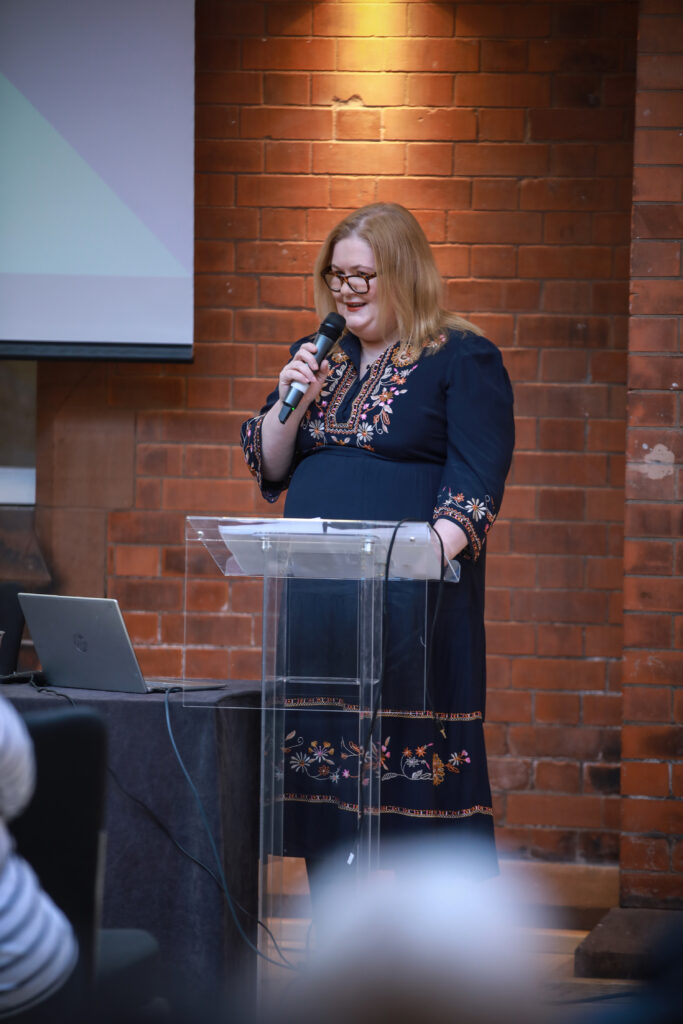
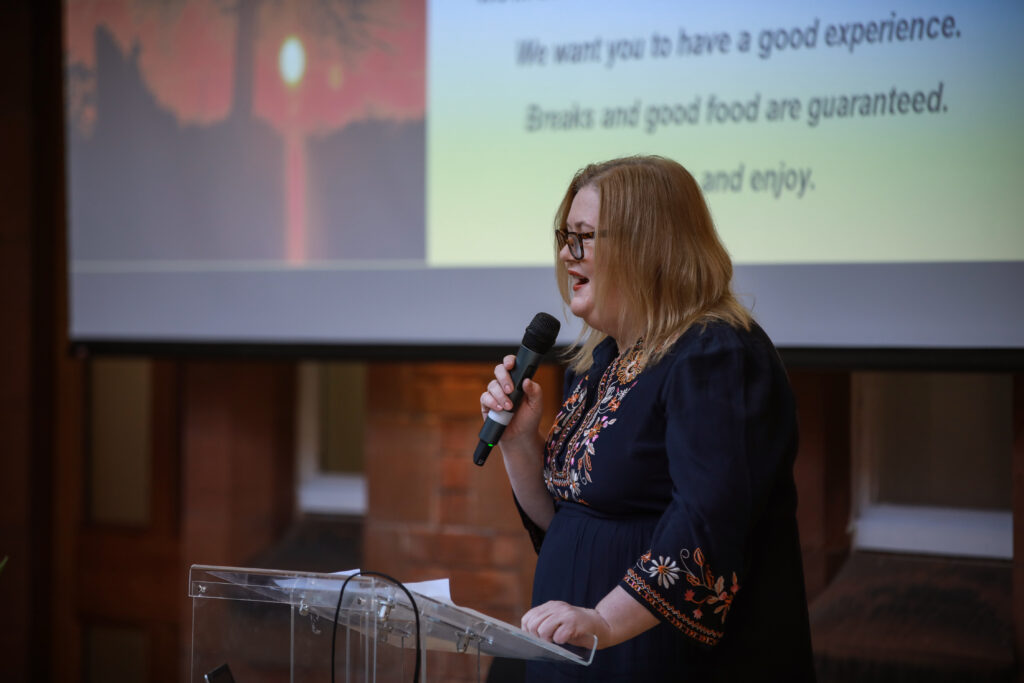
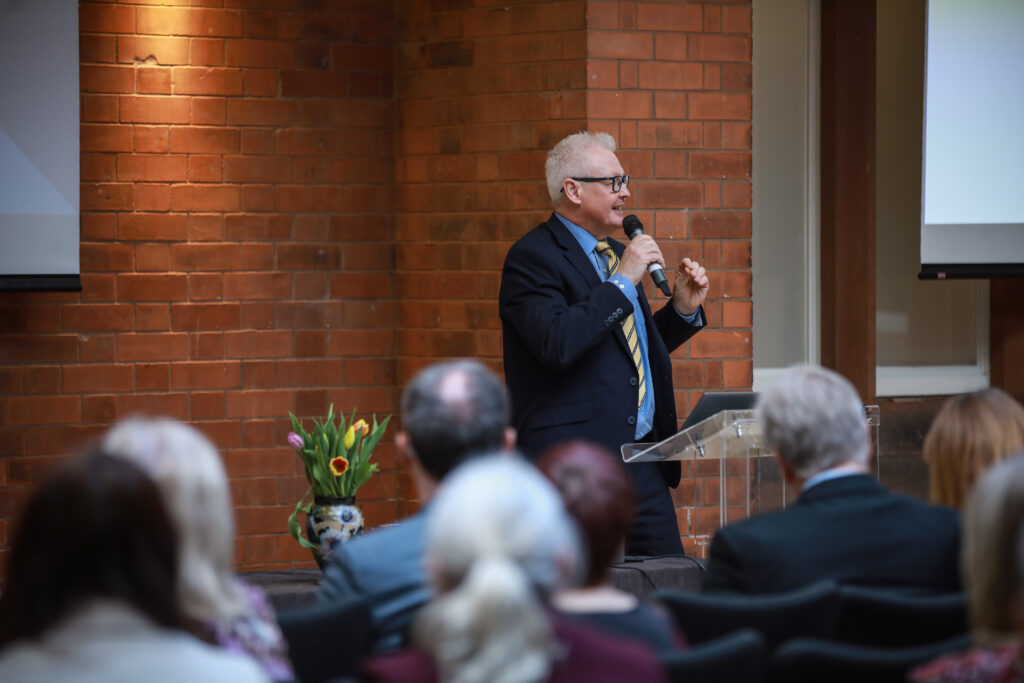
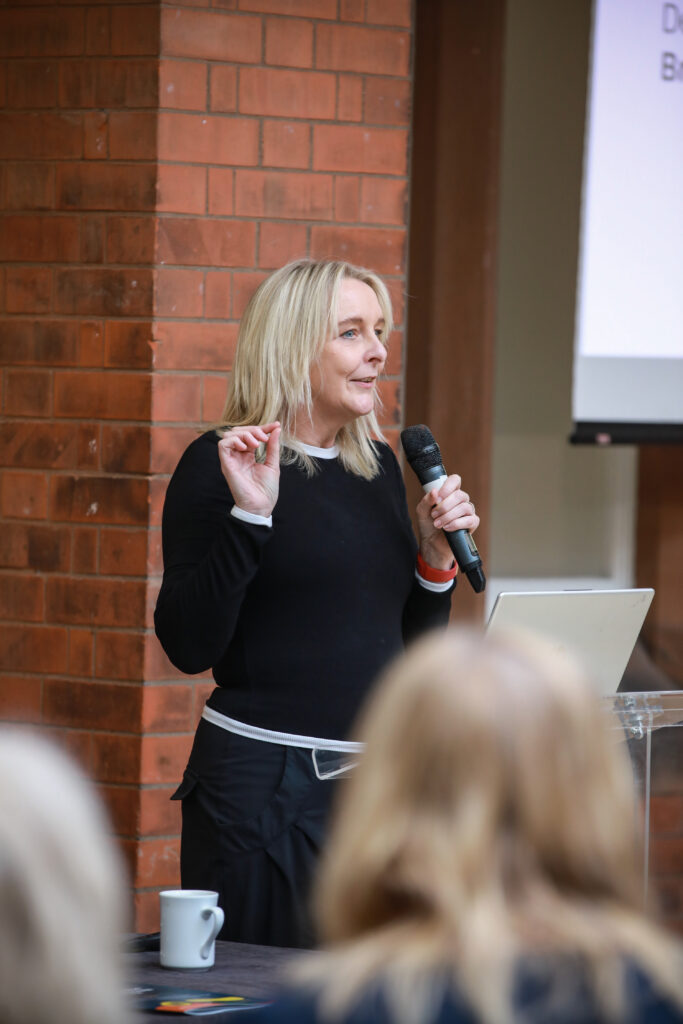
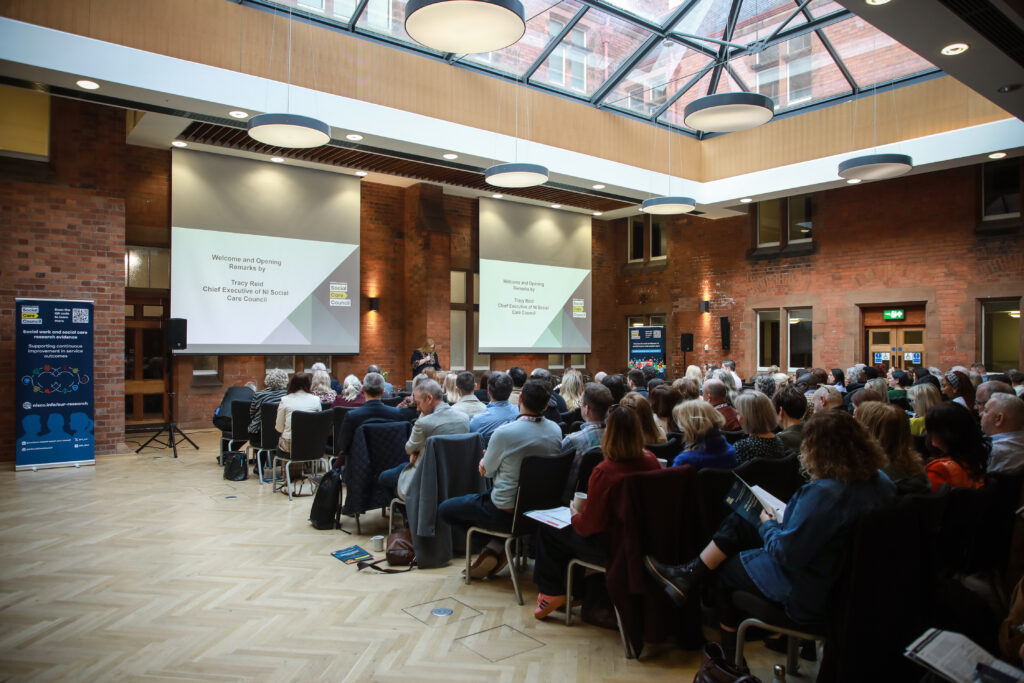
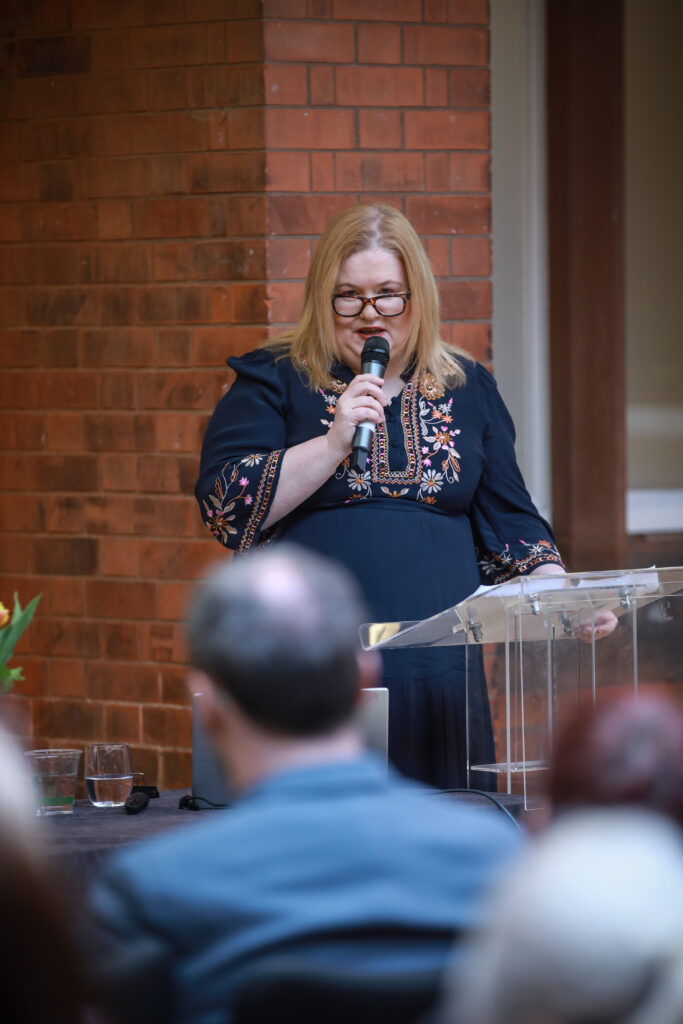
As Chief Executive of the Social Care Council, it was a privilege to welcome delegates to the 2026 Social Work and Social Care Research Conference, now in its 13th year.
Each year the conference has grown from strength to strength and the Northern Ireland Social Care Council is delighted to support what has now proved to be the largest event to date. Returning to Riddel Hall for the second time was a popular decision as the venue is well equipped to accommodate the diversity of both the conference’s programme and attendees, whilst at the same time it is giving delegates the opportunity to engage with each other.
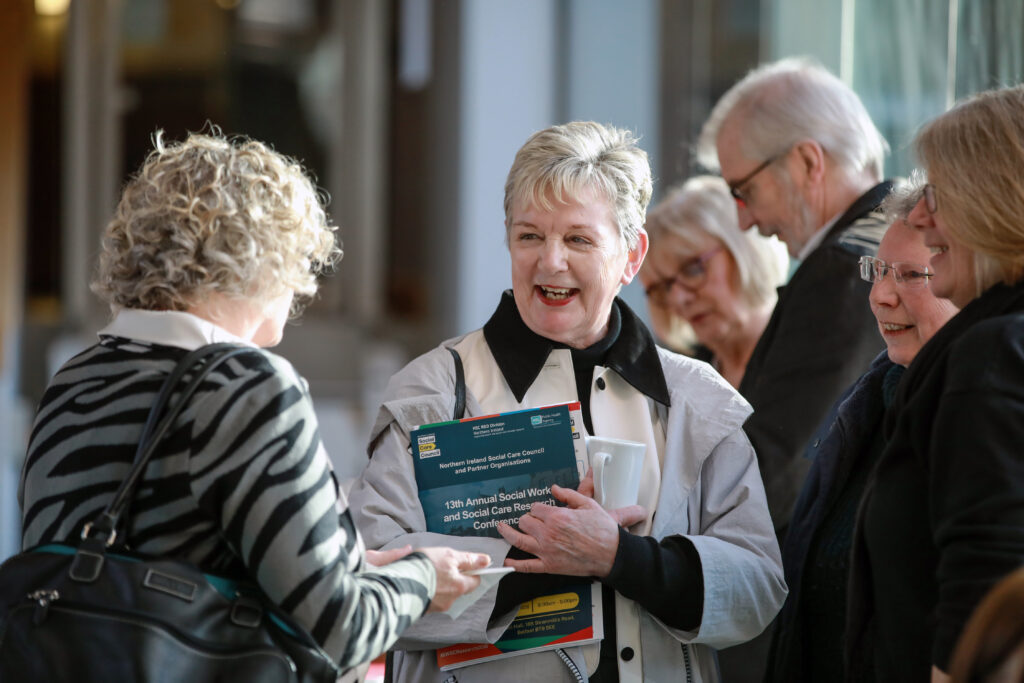
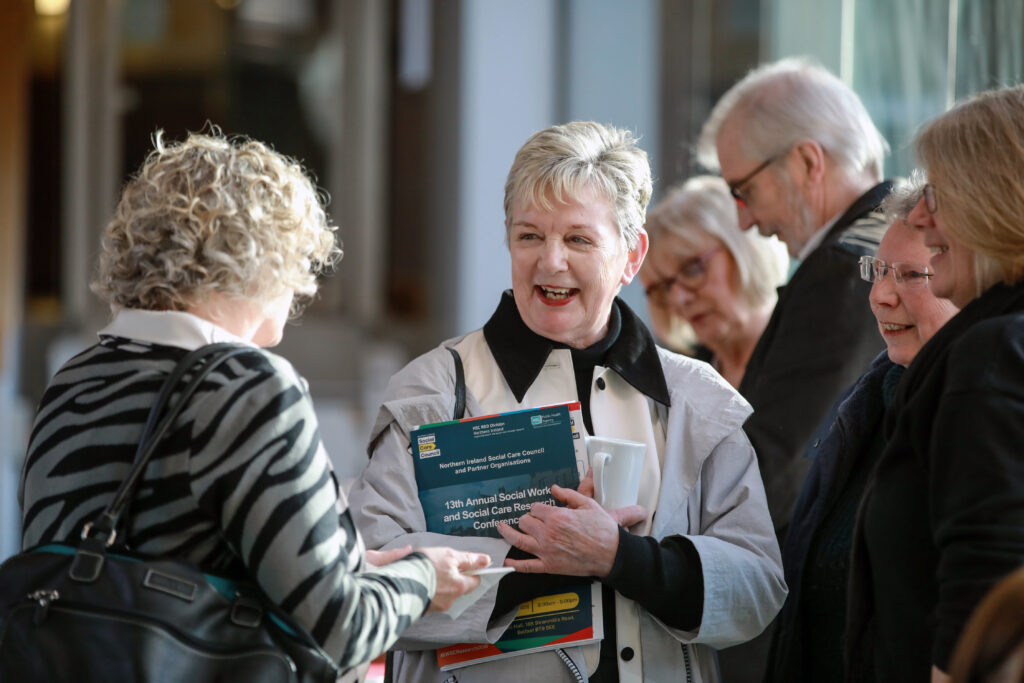
Networking and connecting remain an important component of the conference, not least because its audience includes people from so many different sectors; those with lived experience, carers, practitioners, as well as practitioners from other professions, academics, managers and researchers.
The Social Care Council, along with its partners, has adopted a number of approaches at strategic level to cultivate and nurture a positive and healthy research culture supported by the right infrastructure and leadership. The Research and Evidence Partnership, a new research strategy out for consultation, a research priority setting exercise and research networks are just some of the approaches the Social Care Council has adopted to do this. This annual research conference increasingly demonstrates to the sector and beyond the value of this strategic work.
Whilst implementing improvements and evidence-based research, practice takes time and resources, offering a platform for the dissemination of research and evidence, and a space to showcase new innovations is a vital step in the process. It was therefore heartening to see so many practitioners, service users and stakeholders come together to share knowledge and learn from one another.
The theme for this year’s conference was ‘Innovating for today, while preparing for tomorrow’. In this report you can discover more about the event and learn from the research, innovation and developments happening across social work and social care in Northern Ireland – helping share the far-reaching impact this work continues to have.
Conference format
How did the day go?
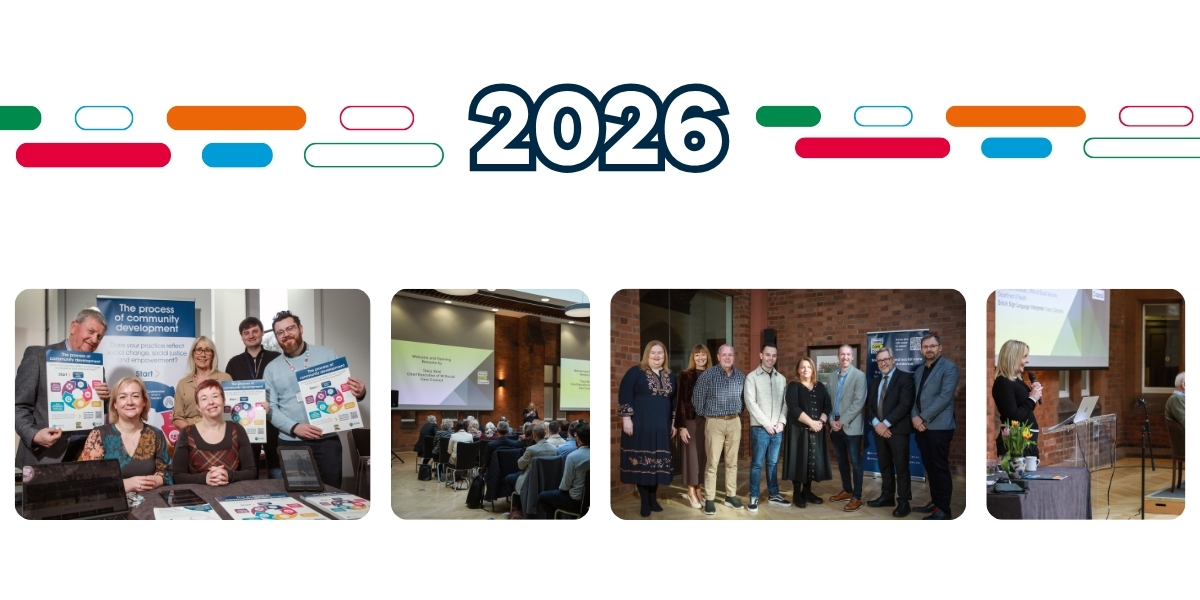
The one-day event took place on 11 March 2026 and the theme was ‘Innovating for today while preparing for tomorrow’.
Delegates heard from a diverse range of speakers genuinely passionate about their research and innovation studies, and actively engaged to share their experiences with others throughout the day.
The conference programme offered something of interest to everyone, providing the opportunity for both delegates and speakers to gain new knowledge and learning.
Navigating the complex and dynamic landscape of technological advances, including developments within Artificial Intelligence (AI) was a feature of the programme. An overarching message that came through was that ‘it’s about people, not technology‘.
Digital transformation is more about changing people’s mindsets and organisational practices than it is about choosing specific technology. To ensure safe practice for those who use or may be affected by digital technologies, including AI, delegates were advised of the need to be vigilant and consider the need for robust ethical standards and regulation to mitigate any potential risks.

Keynote speeches
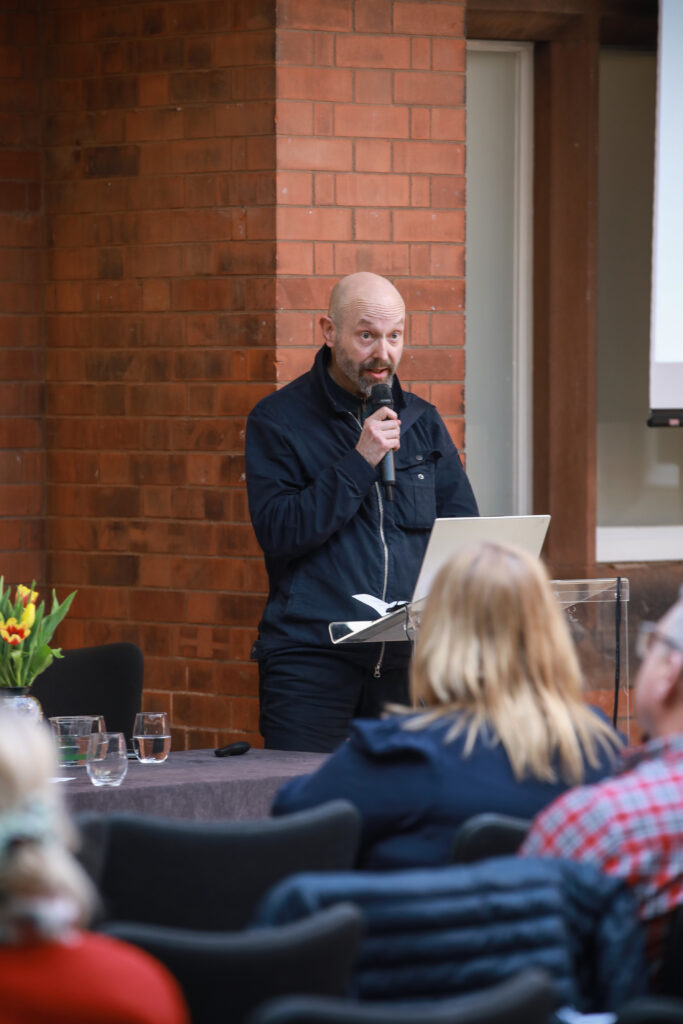
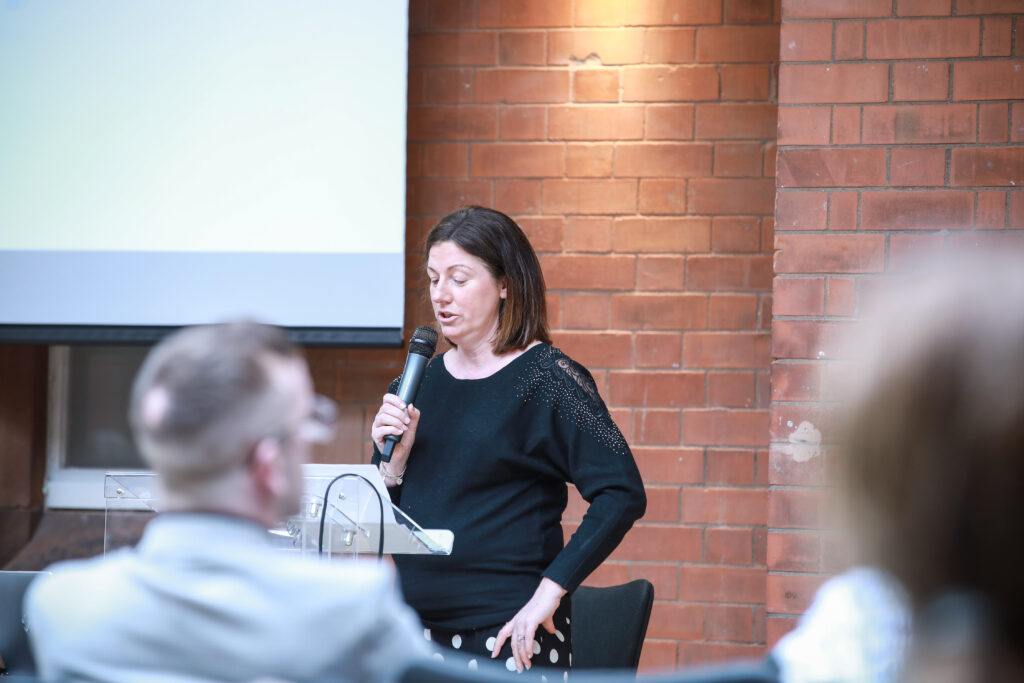
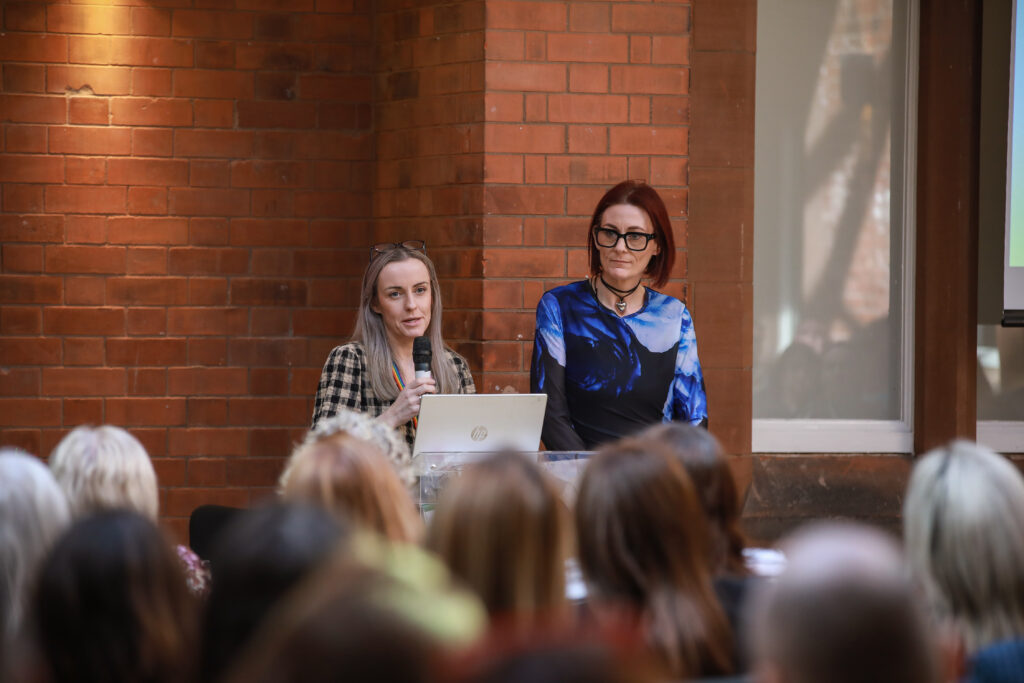
Keynote speakers who bring expert knowledge, passion and experience, transferring their wisdom and learning to delegates, have been a feature of the research conference since its inception. Once again in 2026, it was a privileged to have a line-up of excellent speakers.
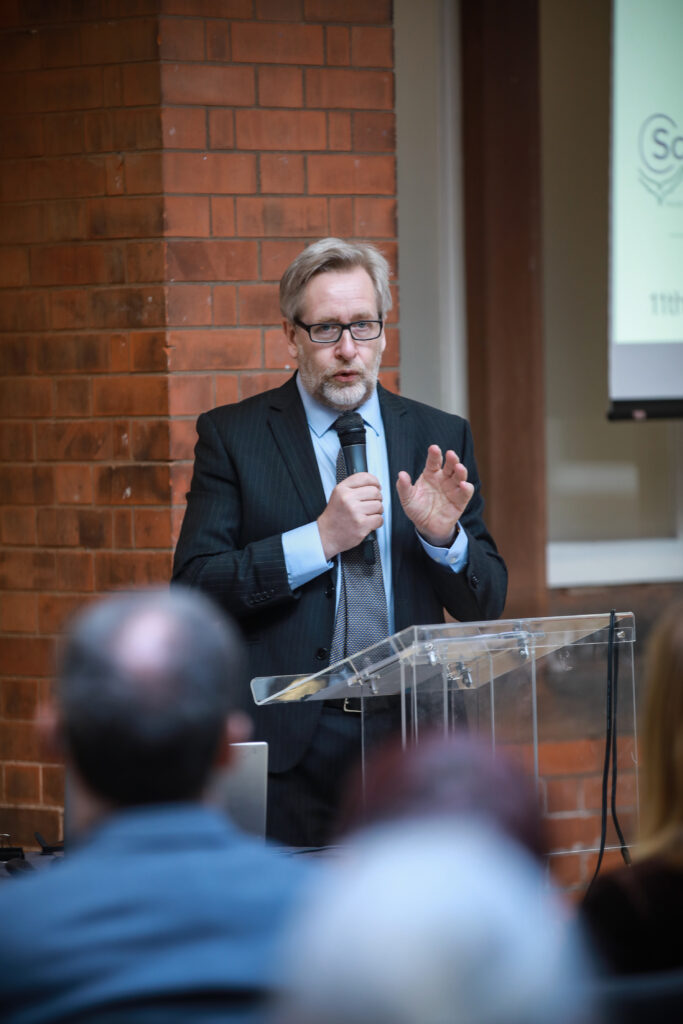
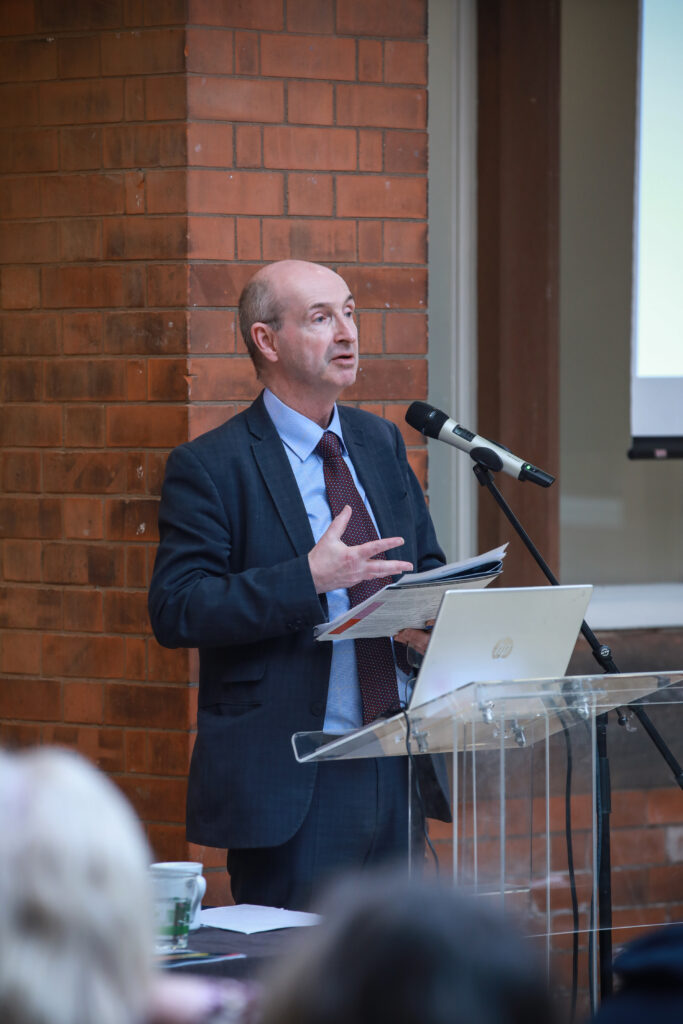
Professor Donald Macaskill, CEO, Scottish Care
Setting the scene and tone of the conference, Professor Donald McCaskill began by providing a balanced and thoughtful presentation, titled ‘The Soul in the Circuit’. He advocated for a compassionate human rights-based approach in any adoption of technology and in particular the use of the PANEL Framework – which is ‘Participation, Accountability, Non-discrimination, Empowerment and Legality’.
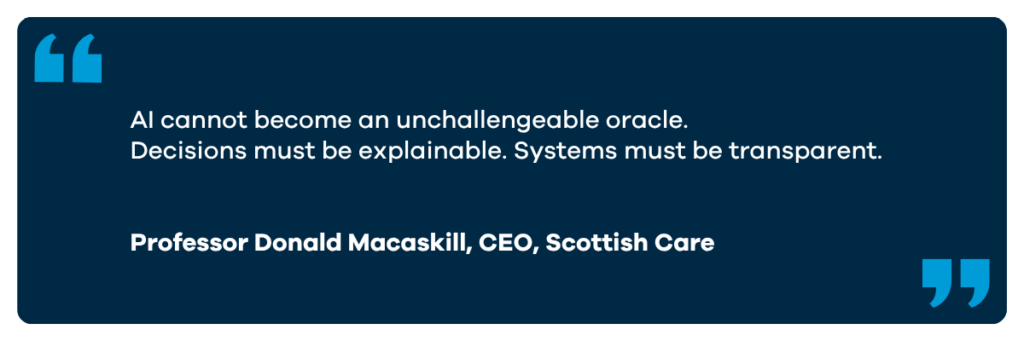
Professor Macaskill suggested the measure of success in AI in care is not efficiency, but human connection. If AI deepens relationships, strengthens autonomy, widens possibility, and restores dignity then it is ethical.
However, if it replaces presence, narrows choice, or fragments relationships then it is not.
He left the audience with the final thought – ‘We stand at a moral threshold. Not simply a technological one’.
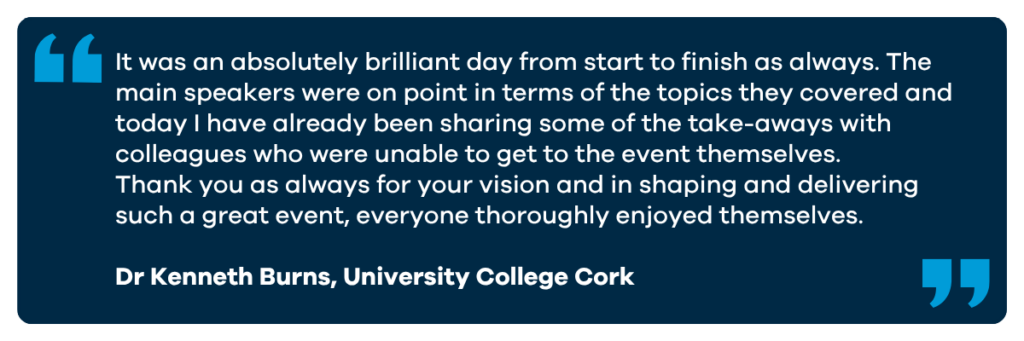
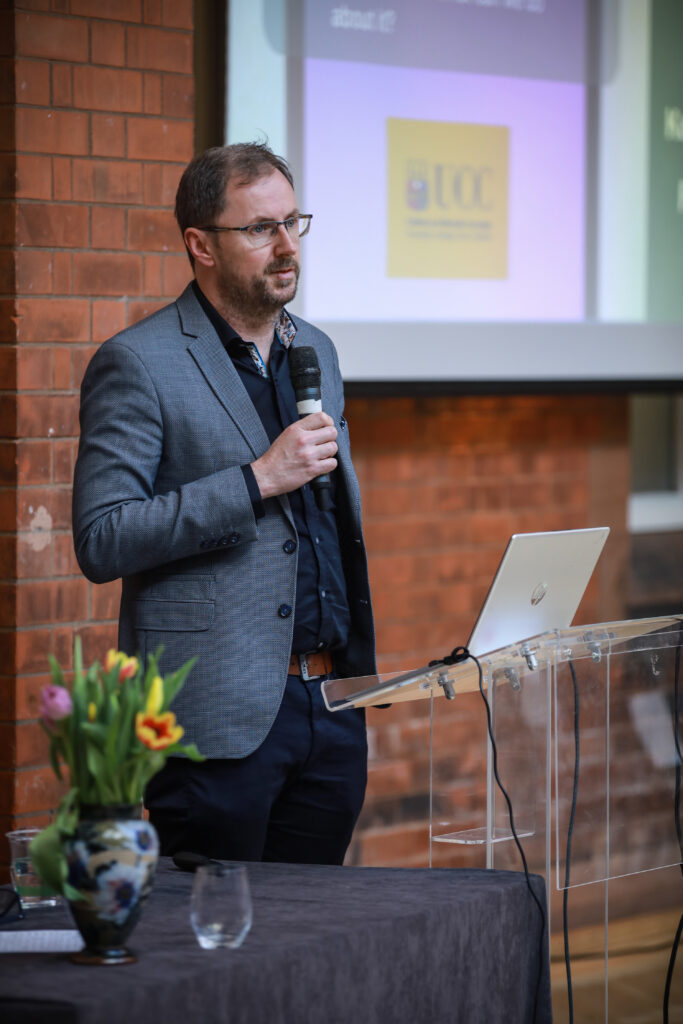
Dr Kenneth Burns, University College Cork
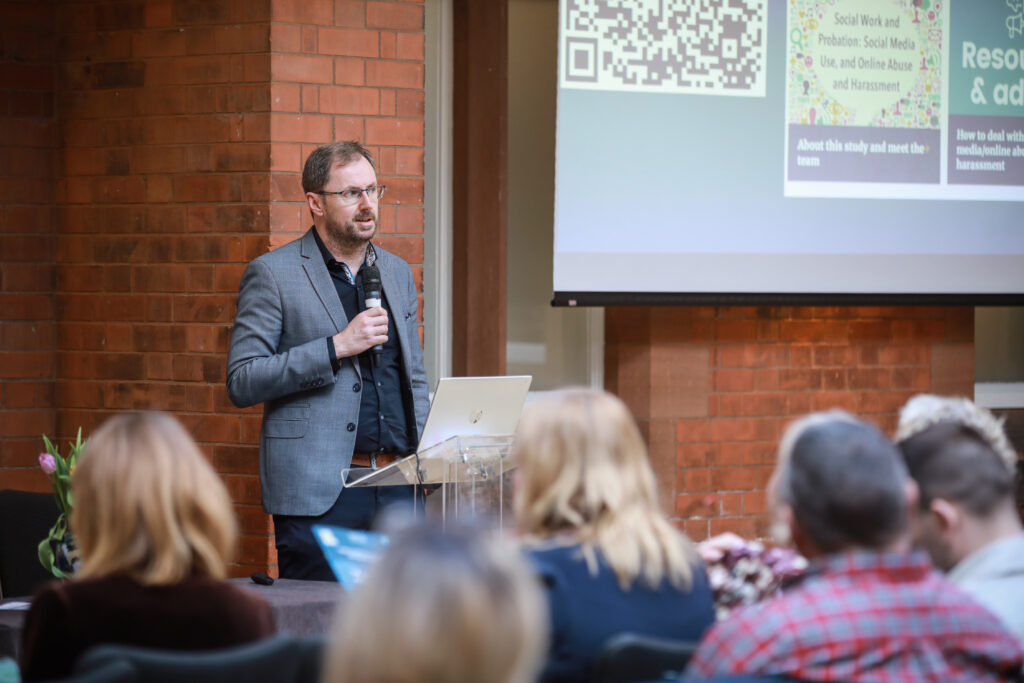
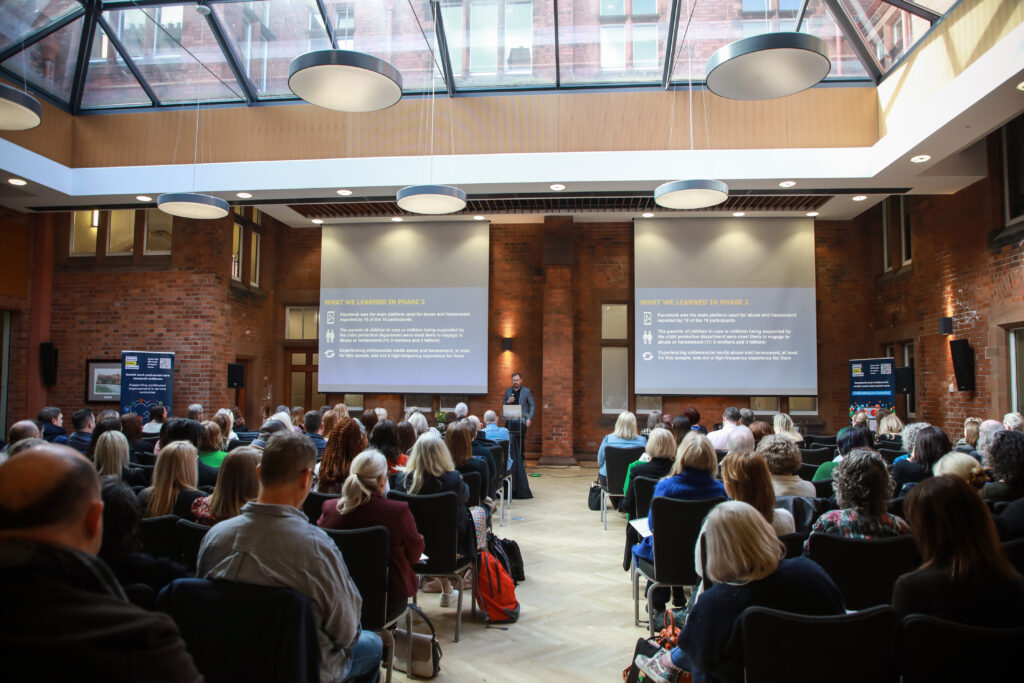
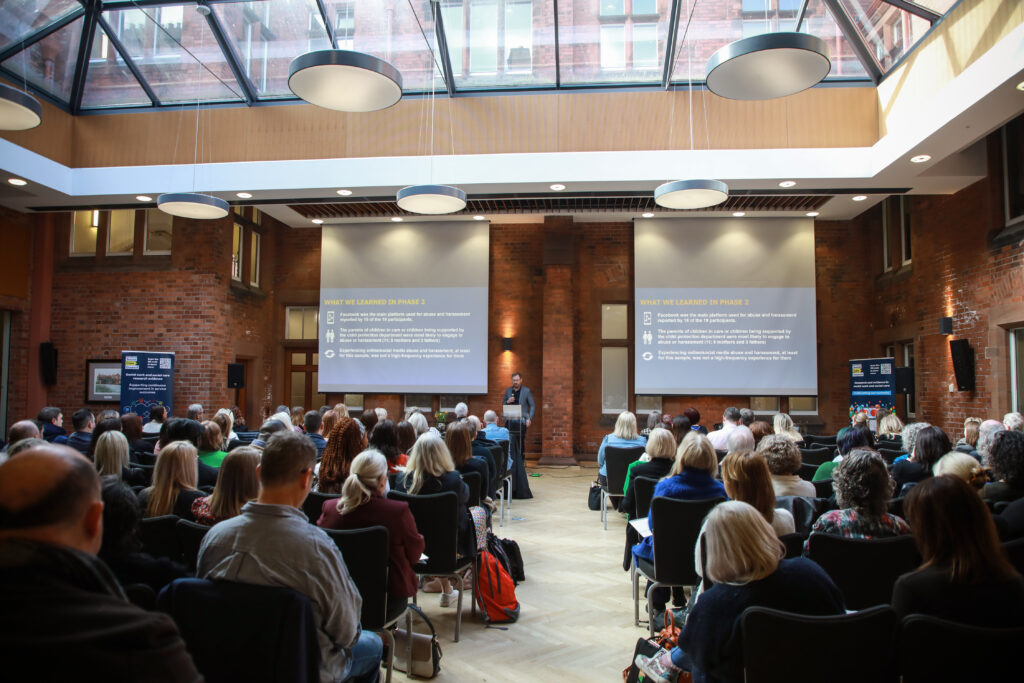
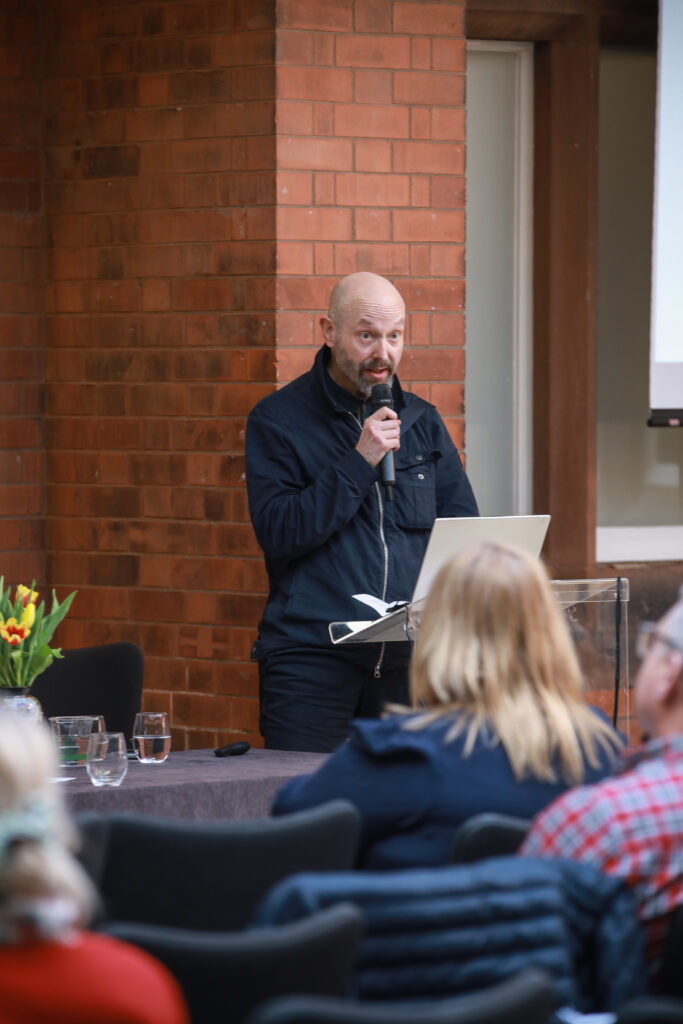
In an enlightening presentation Dr Kenneth Burns drew on the evidence from a national survey of social workers, students and probation officers conducted by himself and colleagues in the Republic of Ireland. In a room full of social workers and social care practitioners he was keen to advise from the outset that the potential benefits of engaging with social media outweighs the potential negatives. The evidence however suggested that one in six social workers experience social media abuse and online harassment in the course of their work.
Social media abuse can affect every aspect of life and is not restricted to any professional group, or age group. However, the important learning from this research study centred on the steps that staff can take both in their professional lives, and their personal lives, to prevent issues of abuse and harassment.
An informative framework and a set of practical steps was shared with delegates to help practitioners, carers and service users stay vigilant and help draw the line between fair and abusive behaviours.
The additional role of line managers was emphasised with links to tools offering advice for managers if staff are experiencing online abuse provided, leaving us all with food for thought Kenneth advised on the need for a regular spring clean of any social media accounts professional and personal.
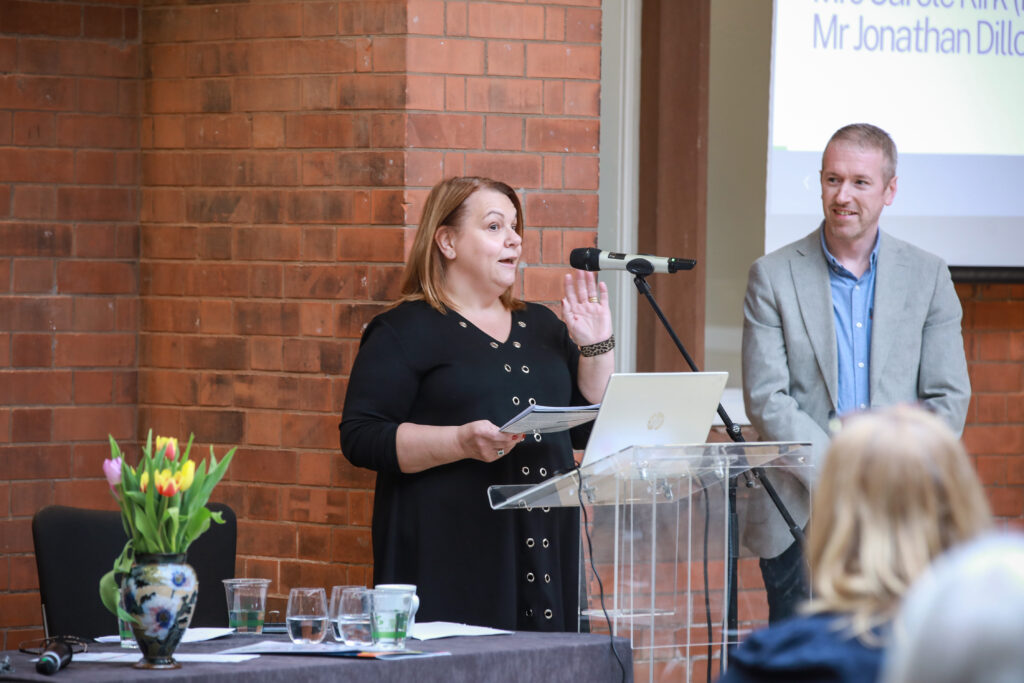
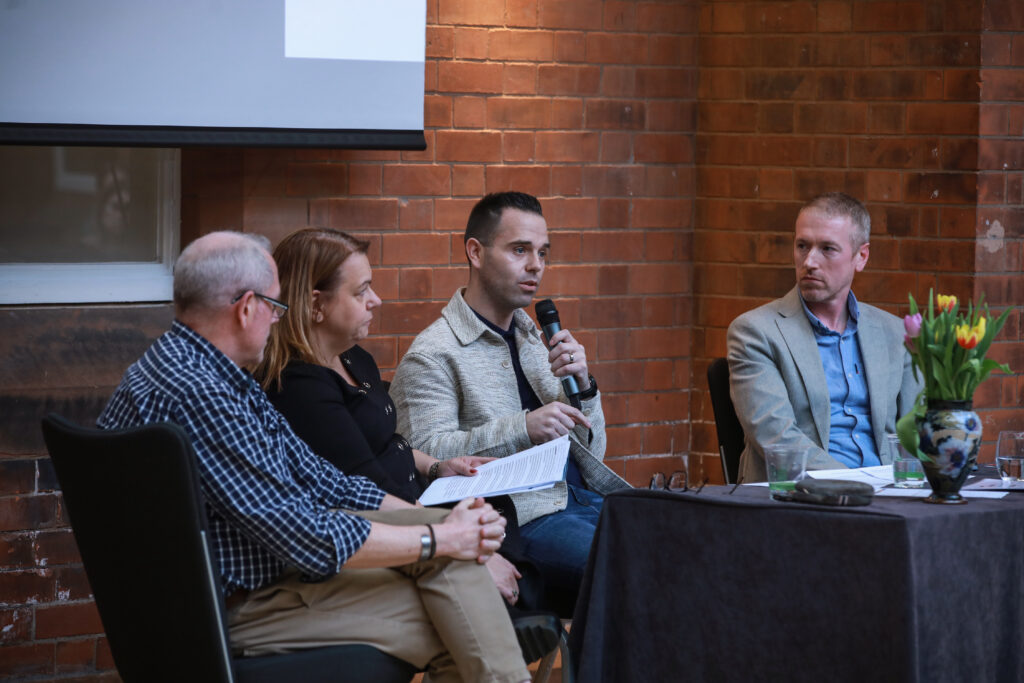
Professor Paul Best, Gerry Marshall (Queen’s University Belfast), Carole Kirk and Jonathan Dillon, Northern Health and Social Care Trust
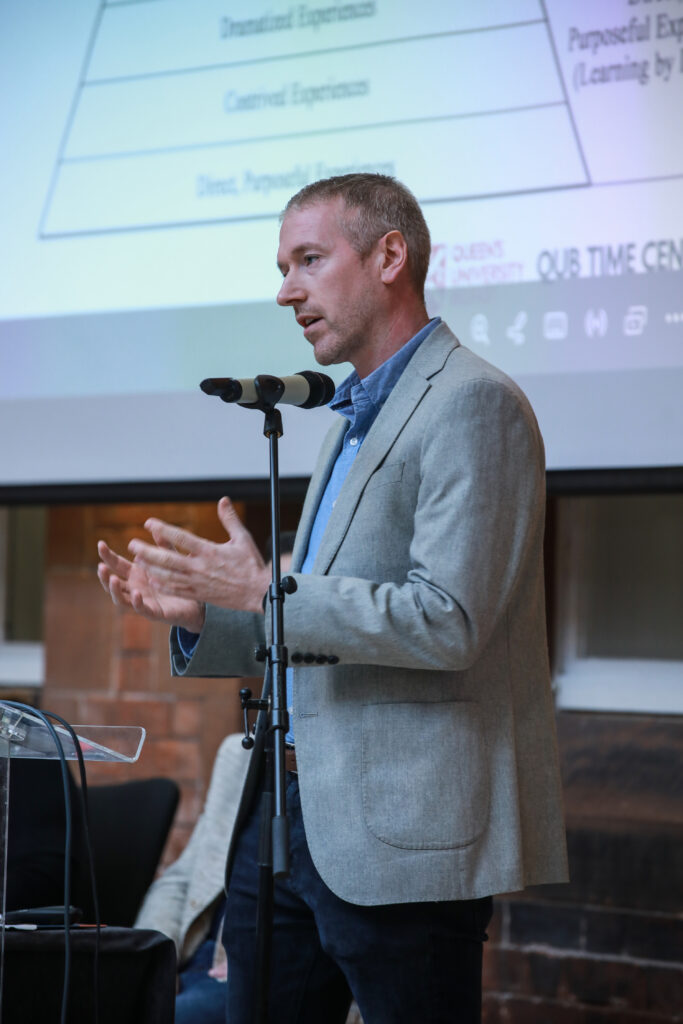
In a collaborative presentation by QUB University Belfast and the Northern Health and Social Care Trust that outlined both the theory and the practical application of recent work in relation to VITAL – a Virtual Intelligence and Adaptive Training and Learning Programme.
Using a range of scenarios, the audience heard about immersive technologies and the use of AI (Artificial intelligence) training tools for social work practice. Professor Paul Best discussed the theory and definitions and how such tools may support the social work workforce offering a safe place for learning.
Carole Kirk and Jonathan Dillion shared views on how the work was initially received and applied within one trust. Based on the evaluation of Dr Gerry Marshall (QUB), suggested that staff, following the immersive training had increased confidence in their role and displayed greater skills. He called for a larger scale study to be undertaken with a greater range of tools.
Conference summary
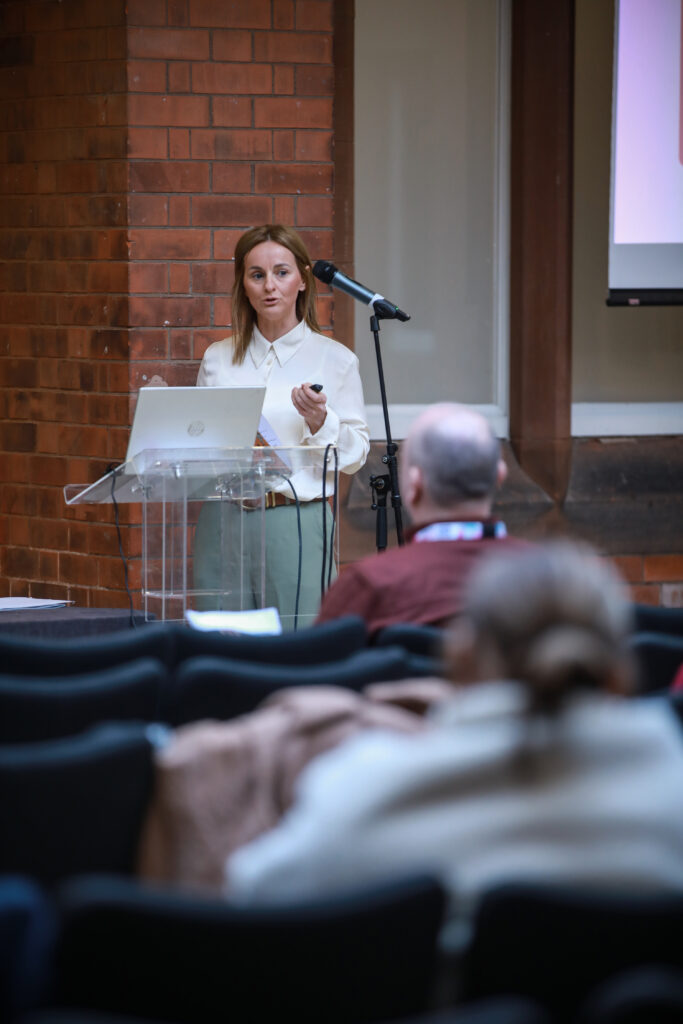
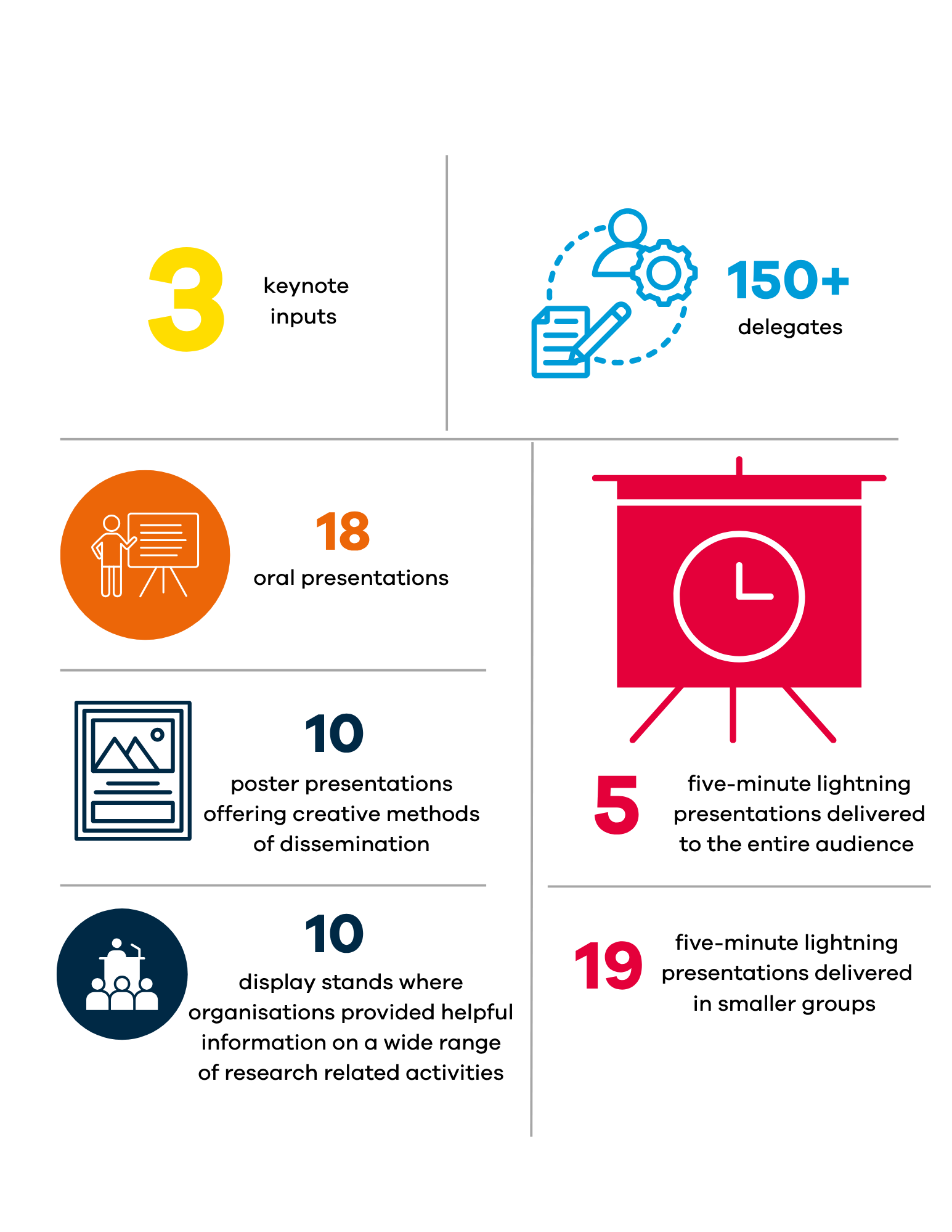
Bringing the conference together, 18 diverse, 15-minute oral presentations, and 24 five-minute lightning presentations were delivered. As always it is both the willingness of presenters to share their findings, and delegates readiness to listen and engage in dialogue, that makes the conference a continued success.
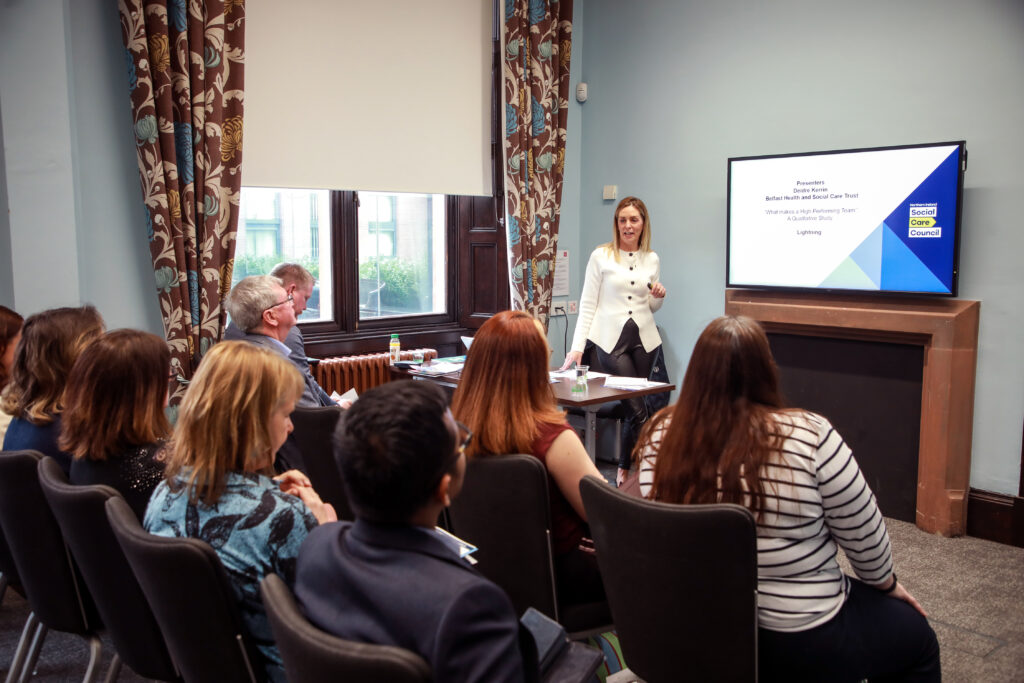
This is the second year that we used the lightning presentation format and based on the feedback from delegates these short, rapid presentations proved to be very successful.
Five were delivered to the entire audience focusing on:
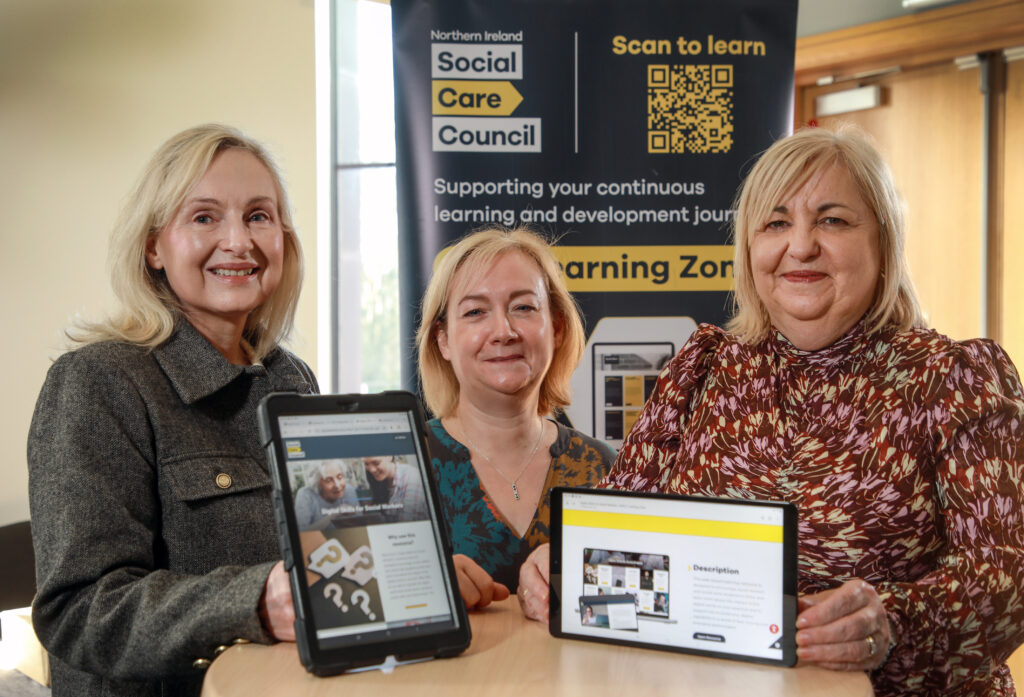
- Launch of Building Digital Skills and Capacity (Social Care Council).
- Closing the Gap between Research and Practice (Praxis).
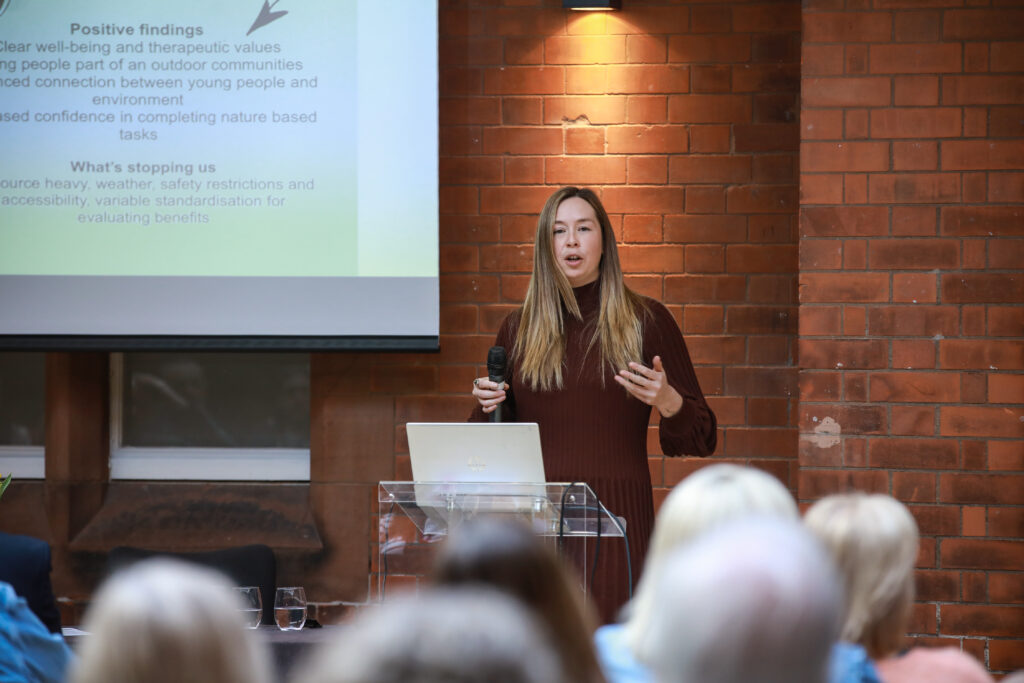
- Nature Based interventions in Social Work and Social Care (Atlantic Technology University, Sligo).
- Developing and Implementing Domestic violence guidance (Tusla).
- Understanding Attention Deficit Hyperactivity Disorder (Belfast Health and Social Care Trust and West Belfast GP Federation).
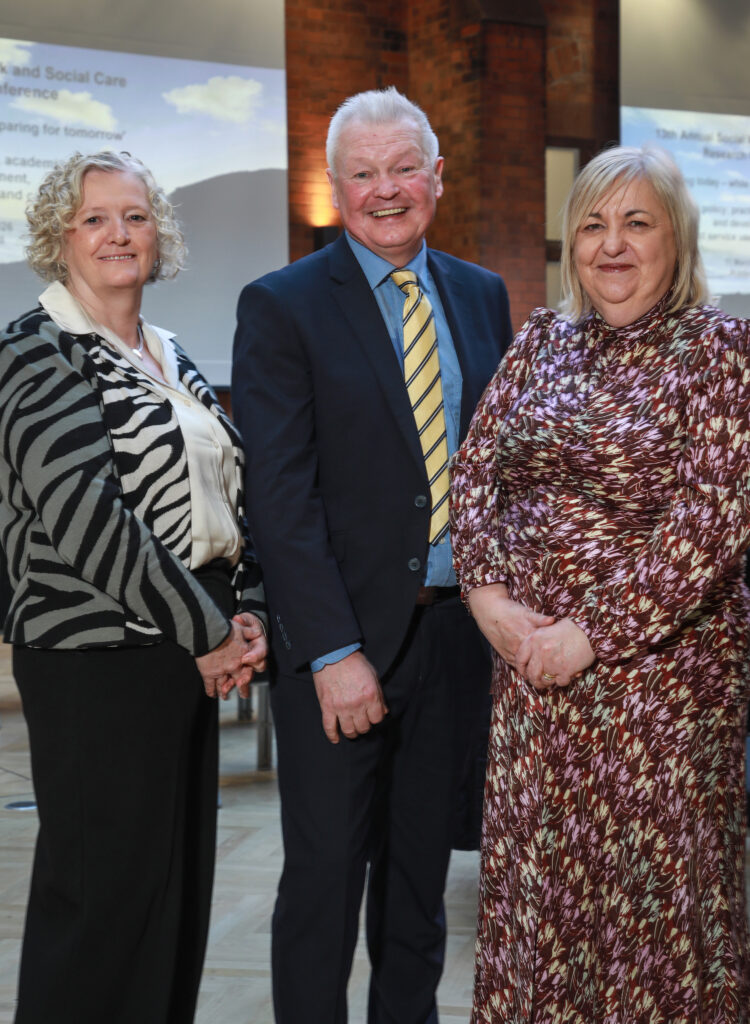
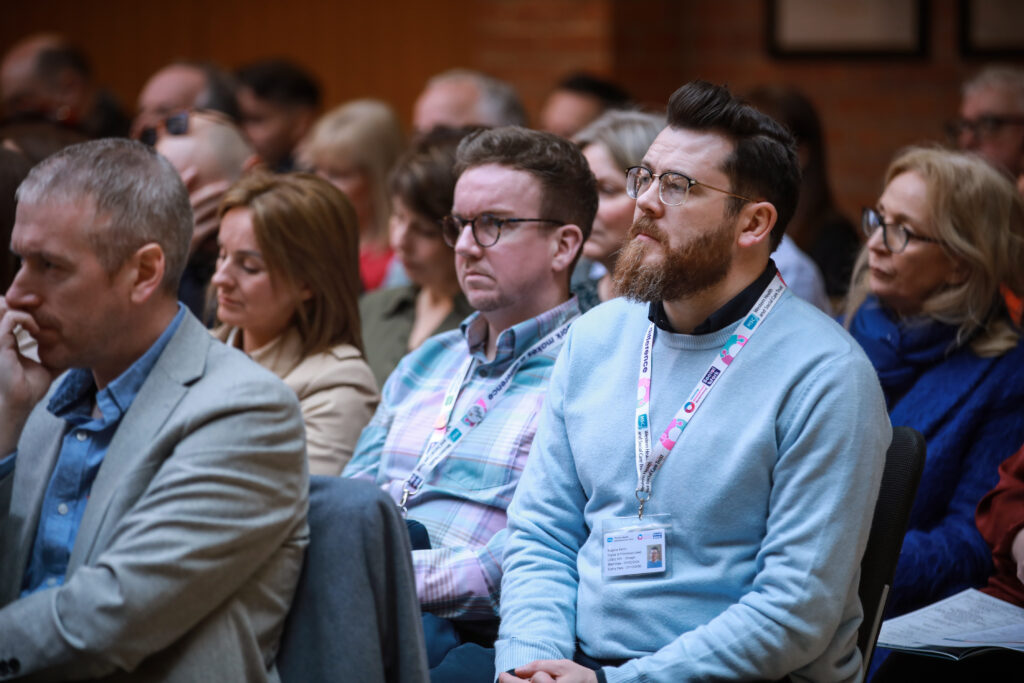
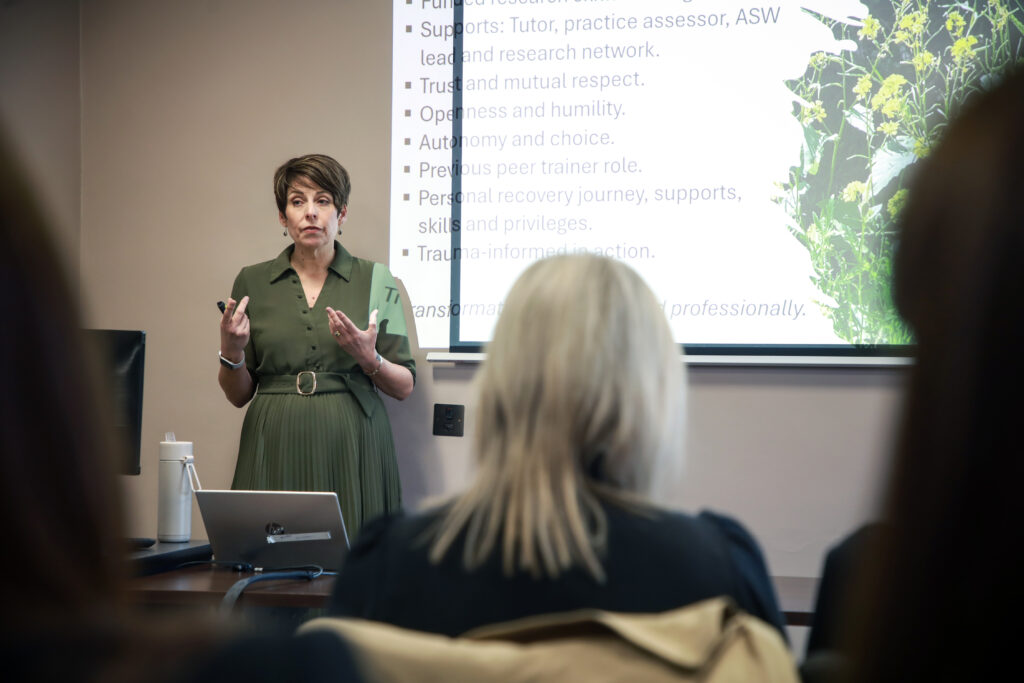
Small Groups
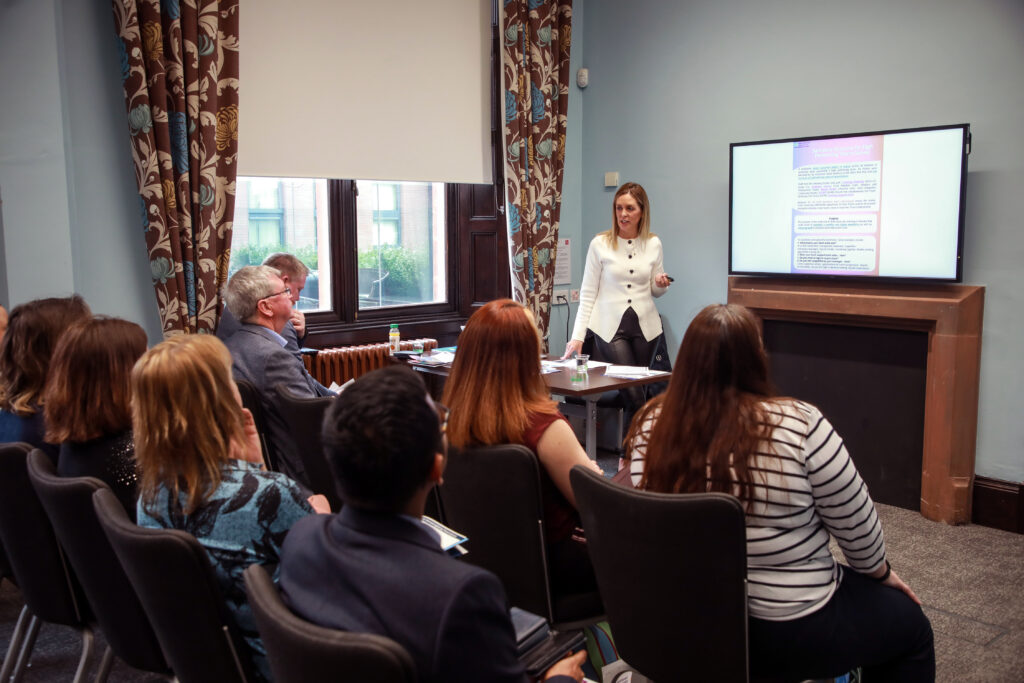
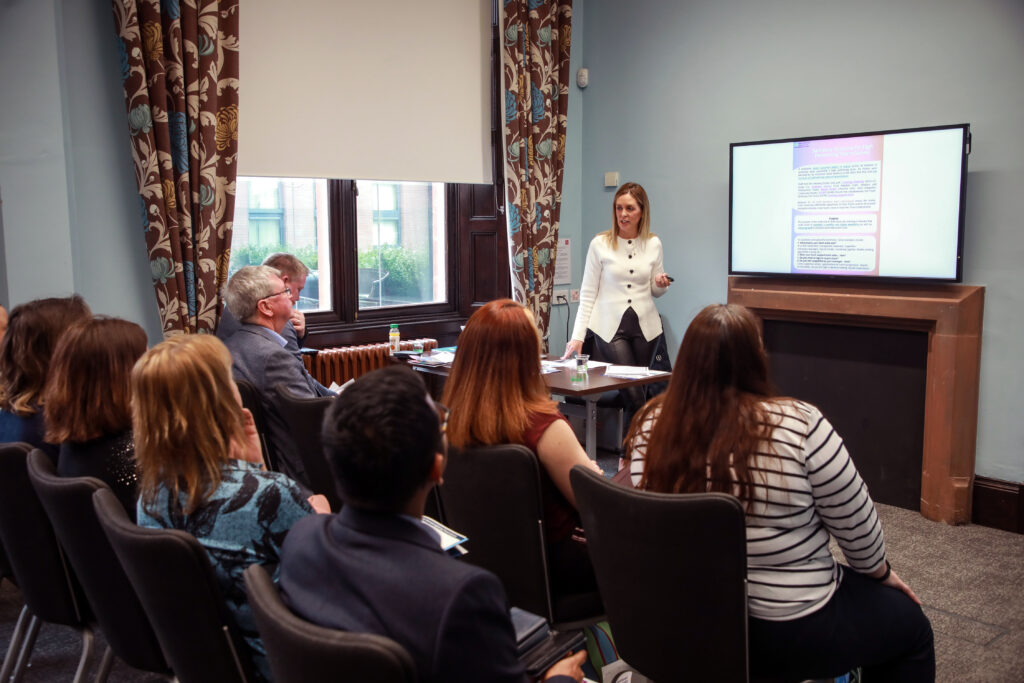
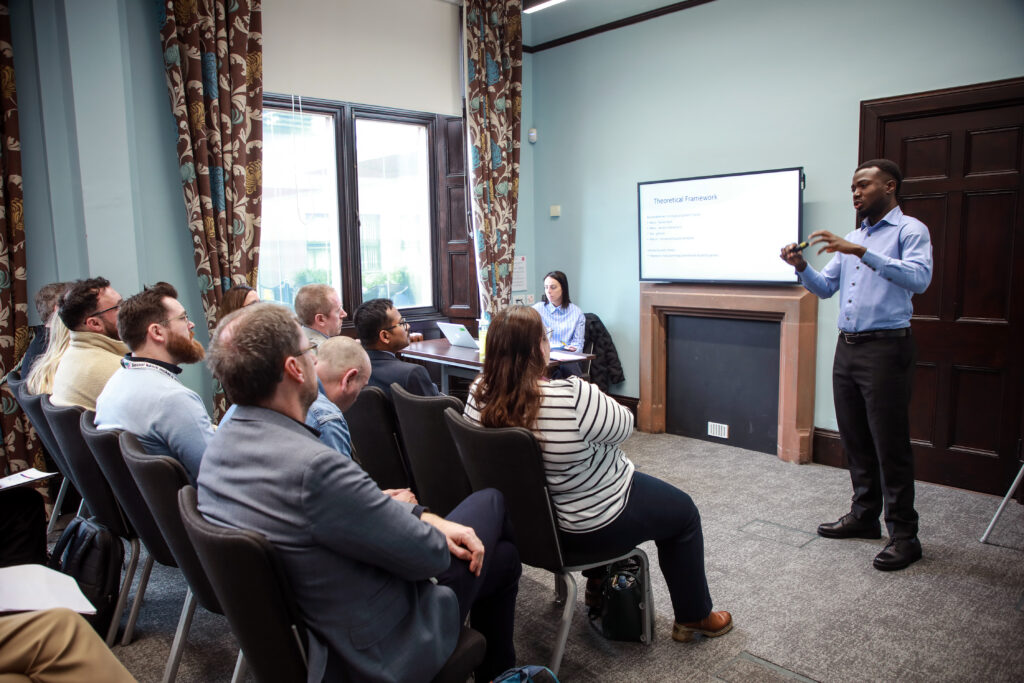
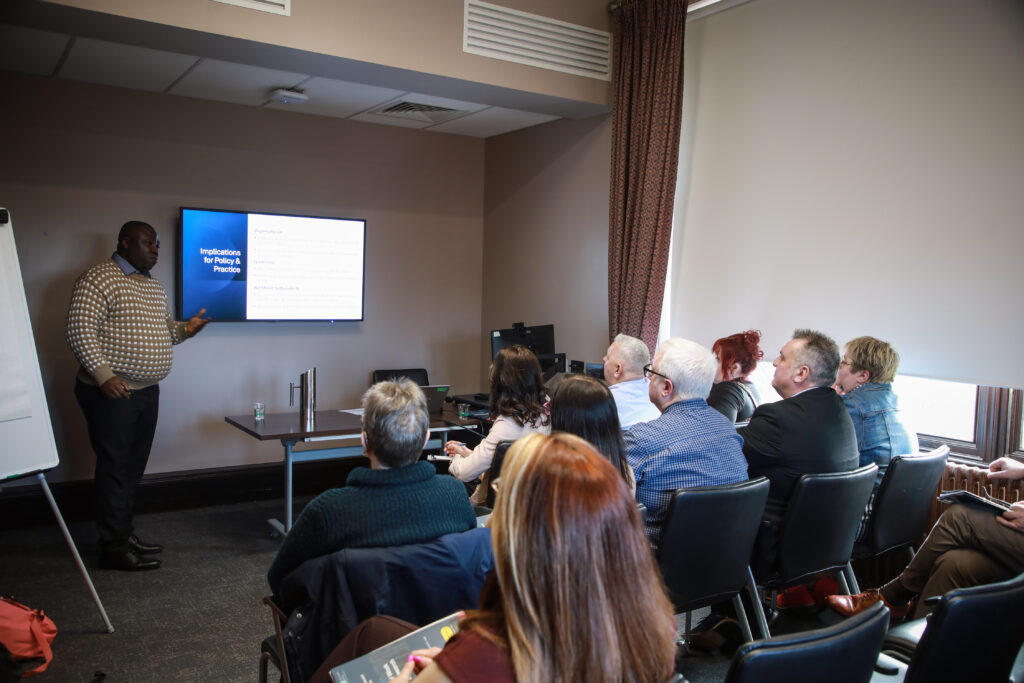
This year the chairs of our small group sessions had the task of managing two 15-minutes orals and two five-minute lightning presentation. This gave more presenters and delegates the opportunity to learn from a greater diversity of research, evidence and innovation.
Continuing with our intent to offer an equal platform for presenters, initiatives were delivered from health, social work, social care, higher education, community and voluntary sector, independent researchers, people with lived experience and carers.
The programme provides details on the variety of topics which ranged from staff retention, to use of AI, cultural competence, compassionate care, leadership, migrant families and disability, short breaks and adult safeguarding. In addition, a range of topics and methodologies, both quantitative and qualitative were employed in studies presented about the conference theme.
To maintain the high standards and credibility of the research conference, each presentation was rigorously assessed in advance and selected by a Conference Abstract Committee. A heartfelt thank you to members of the committee, Paul Webb (Praxis Care), Emily Wilson (Carer) and Rachel Naylor (Ulster University).
If you are interested in receiving a copy of any of the presentations – you can do so contacting conference organisers on SWSCResearchConference@hscni.net.
Research on Display
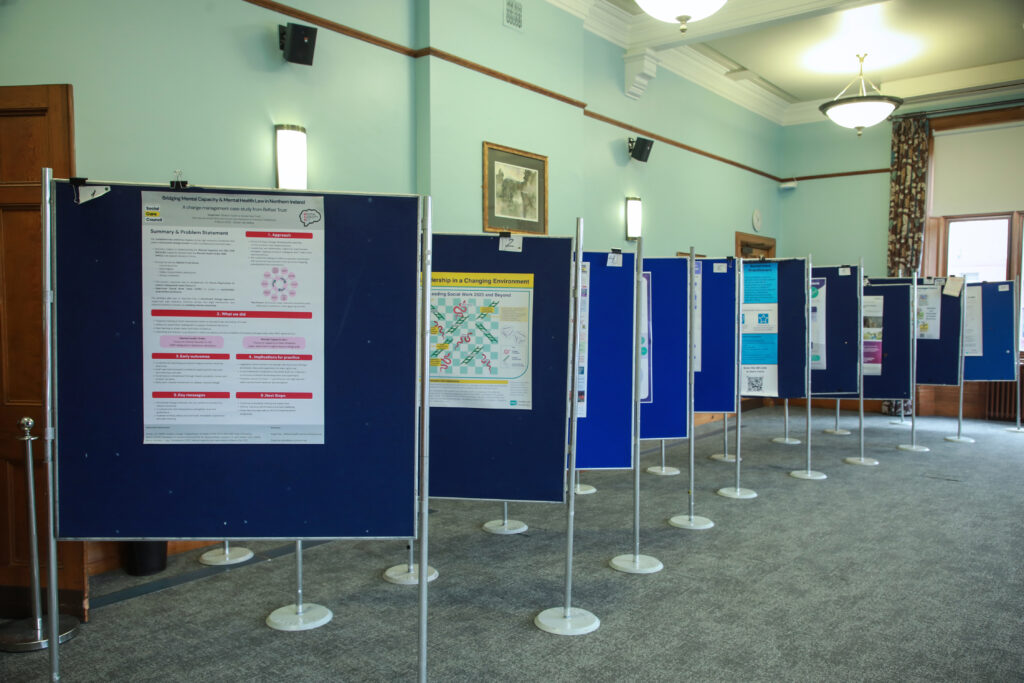
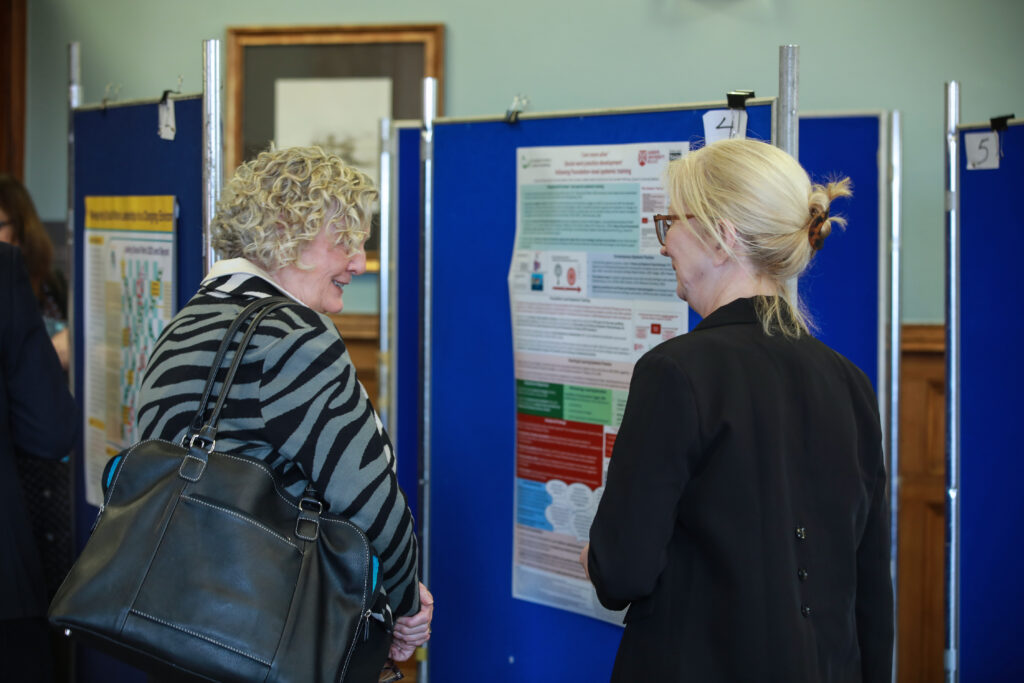
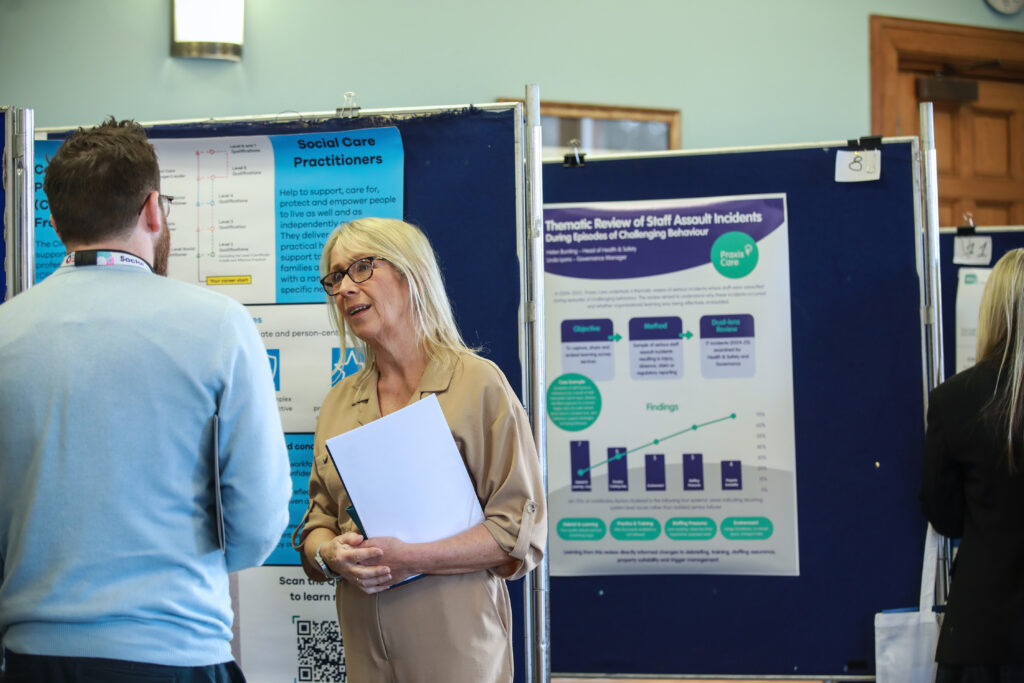
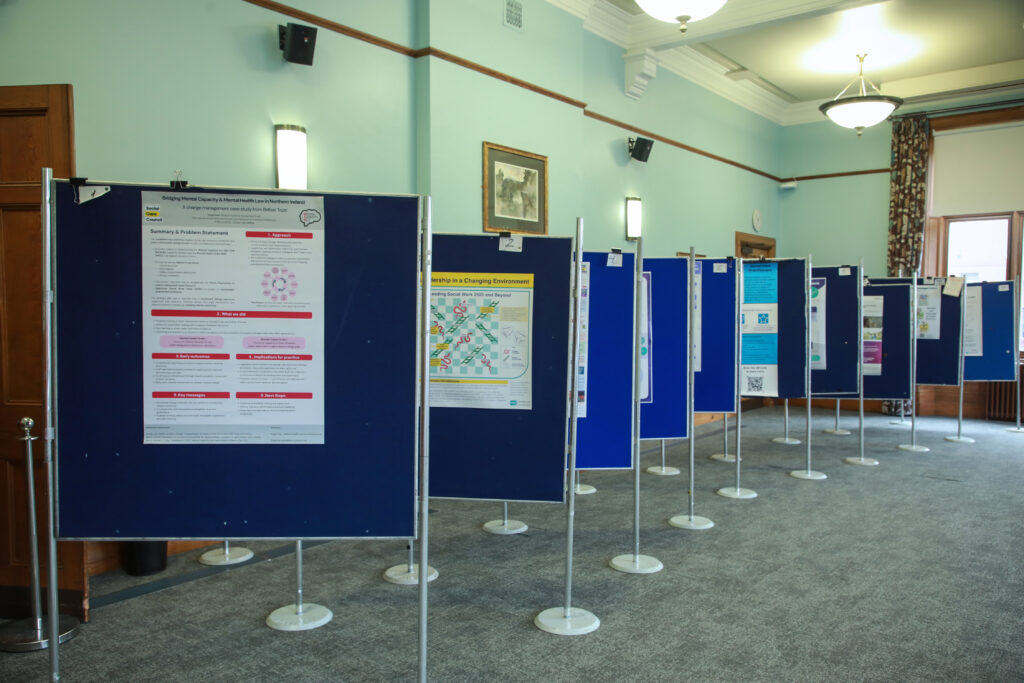
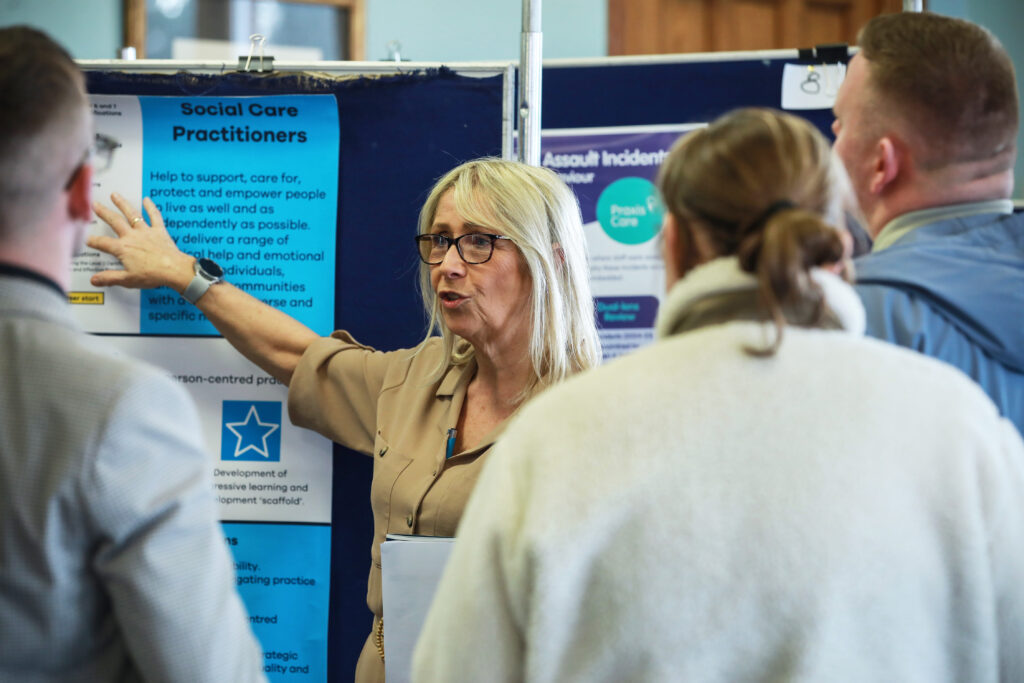
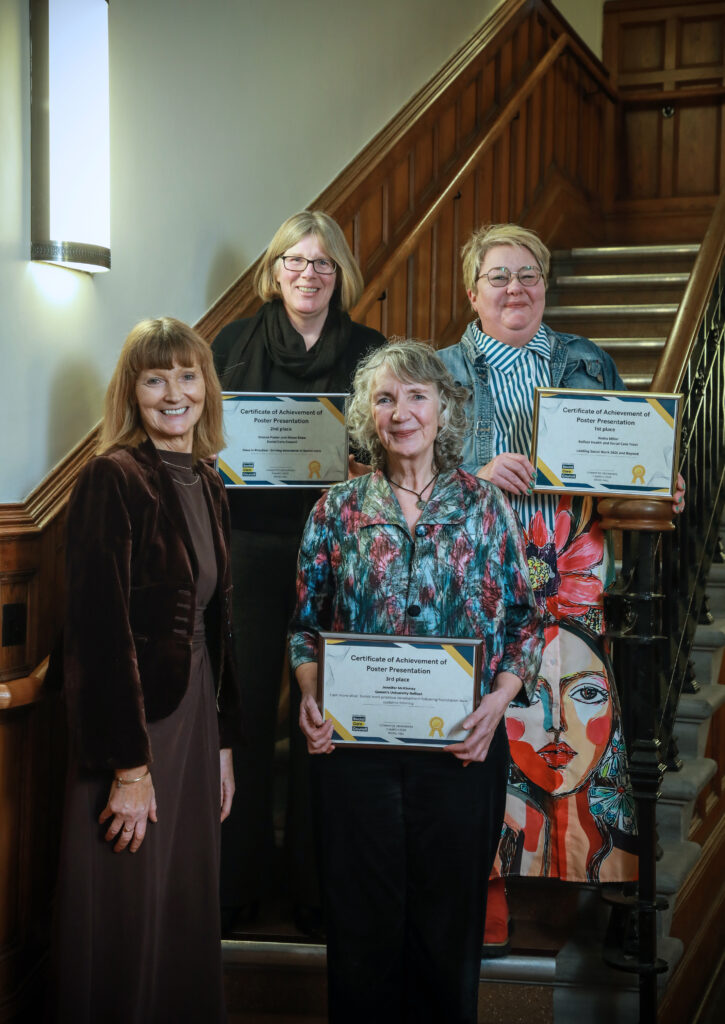
Our gallery of poster presentations remains a popular component of the conference. Each year participants are invited to display poster representations of their work. Delegates of the conference are invited to view the posters and vote for the most inspired work of the day.
As always, the 10 posters presented highlighted exemplary work while their creators were happy discuss their studies in more detail with those in attendance.
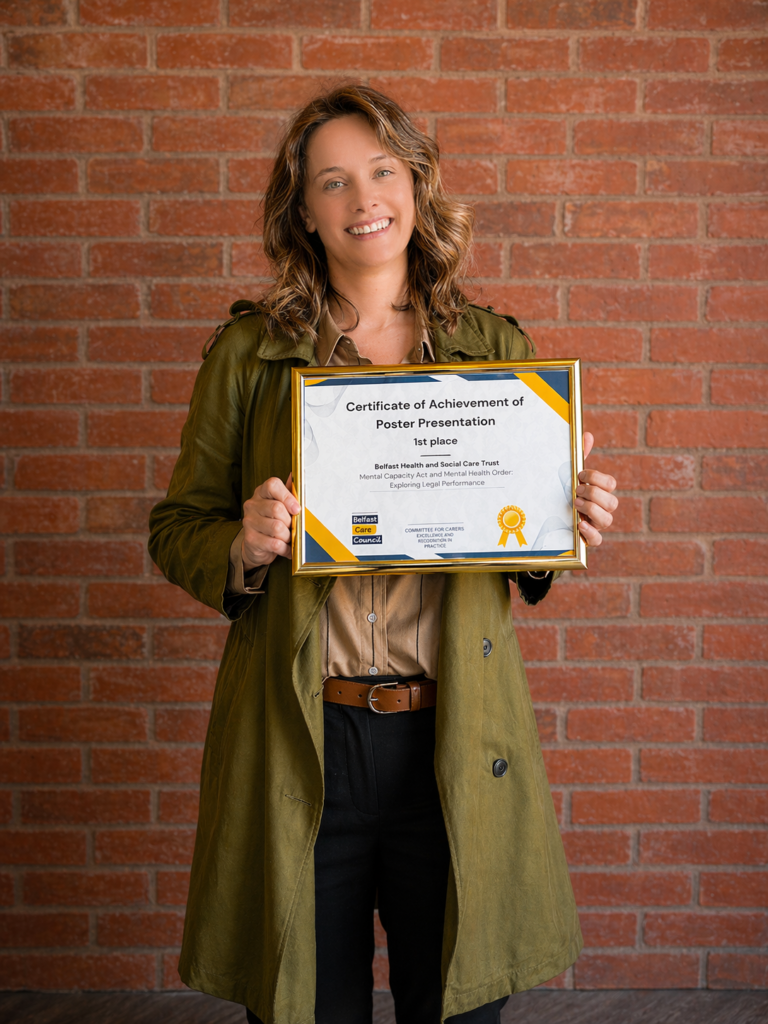
Voting saw, joint first for Steph Kerr, Belfast Health and Social Care Trust and Nadia Millar, Belfast Health and Social Care Trust, followed by Sharon Foster, Social Care Council and Jennifer McKinney, Queen’s University Belfast, in second and third place. Awards were presented by Gerry Guckian, Acting Chair, Social Care Council, who also had the unenviable task of reflecting on the day and summing up the experience for everyone. He took the opportunity to acknowledge both the quantity and the quality of contemporary social work and social care research and evidence and innovative practice taking place in Northern Ireland, acknowledging also the unique buzz and energy he witnessed throughout the day.
A special congratulations to our four winners and our thanks to everyone else who presented.
Achievements recognised – Research Methods Programme, Ulster University
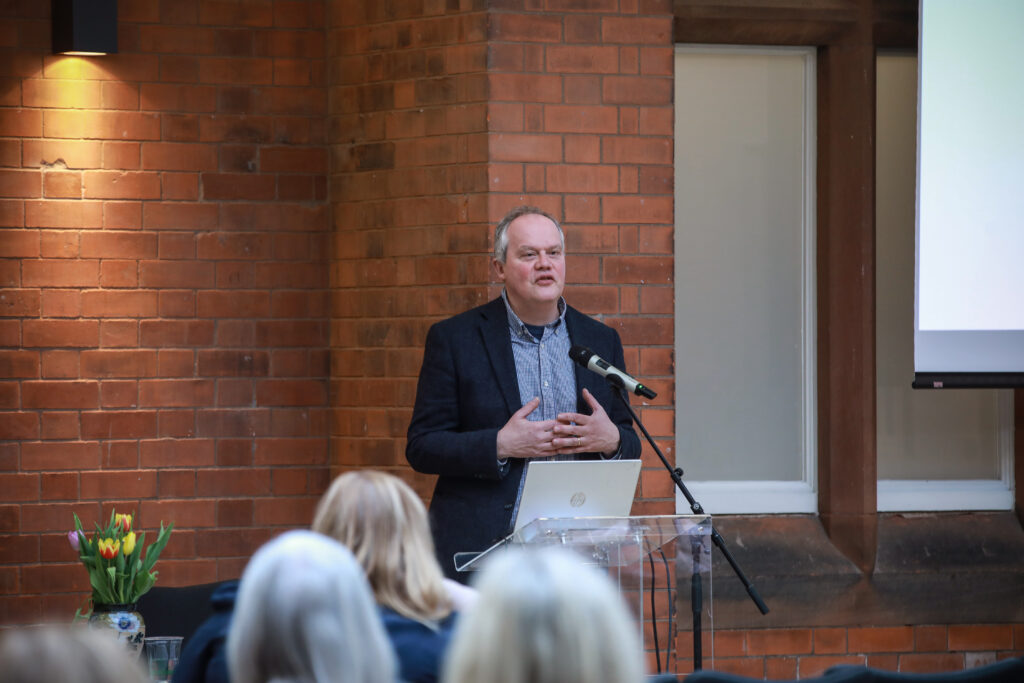
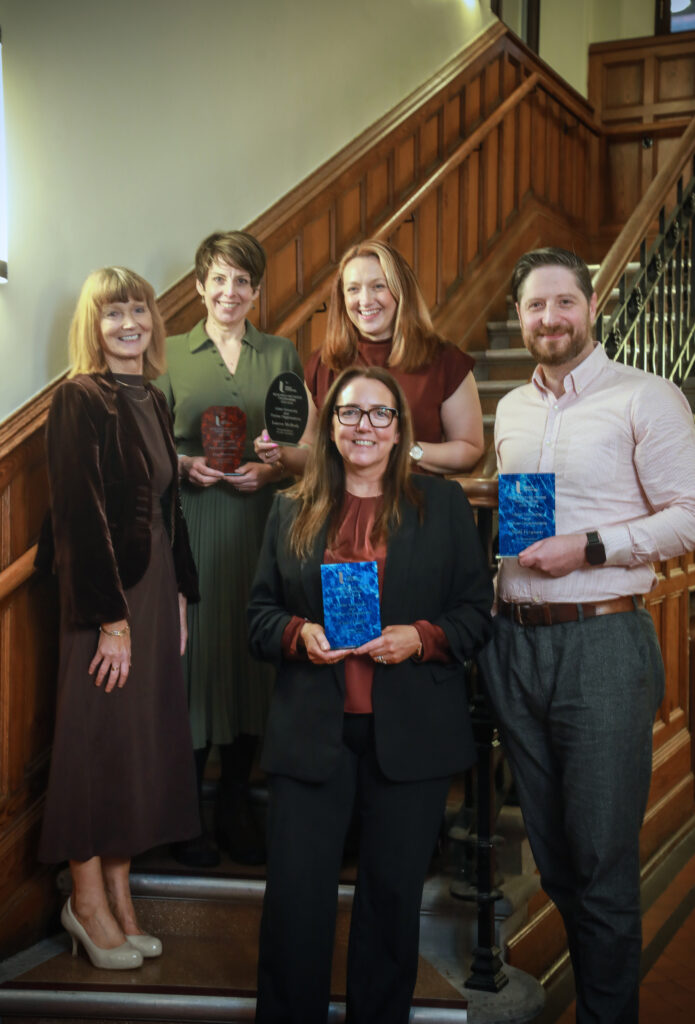
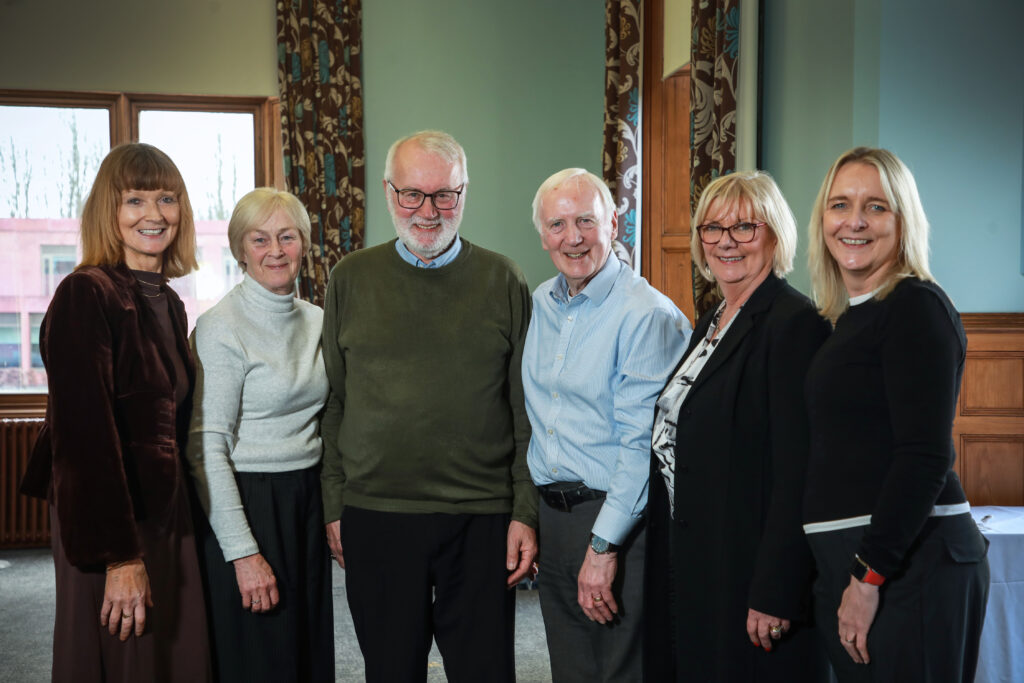
Welcomed by Dr Campbell Killick, Ulster University, social work practitioners and people with lived experience, received their Post-qualifying award from Catherine Maguire, Co- Director of Regulations and Standards, Social Care Council.
Fifteen students successfully completed the Research Methods Programme at Ulster University, including certificate, diploma or master’s level during 2024-25.
The students work extremely diligently producing excellent evidence reviews, completing research and evaluation studies, and influencing others – including at the conference where some took the opportunity to present.
Extending our reach – display stands
Organisations increasingly welcome the opportunity to attend the conference to engage, network and for its connectivity across social work and social care. We are delighted with the range of areas represented, with 12 organisations attending and disseminated invaluable information and materials during the day.
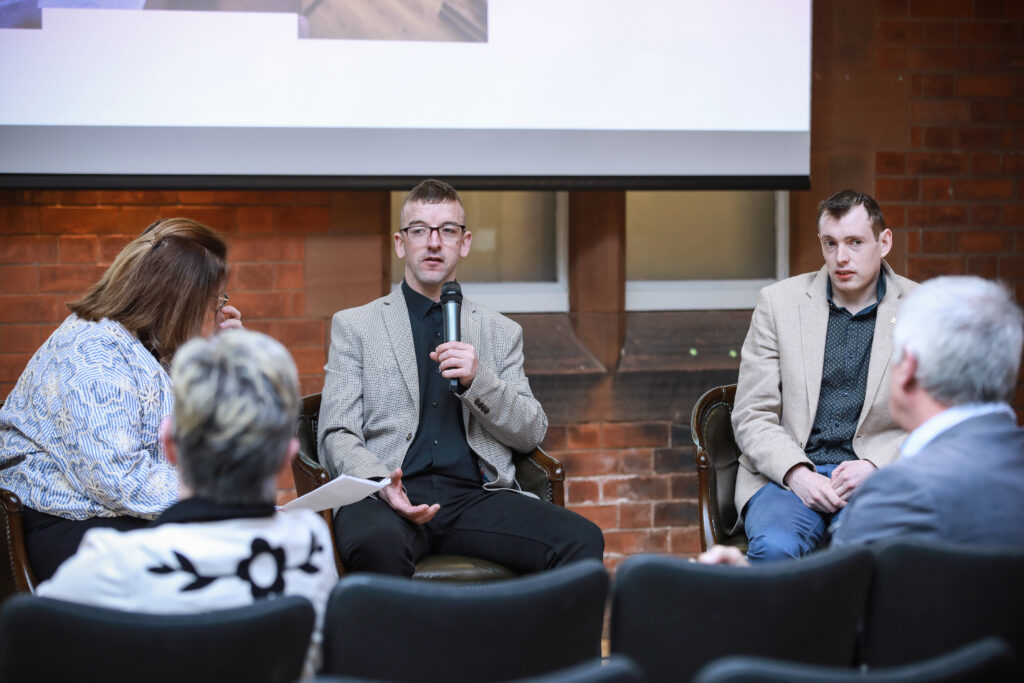
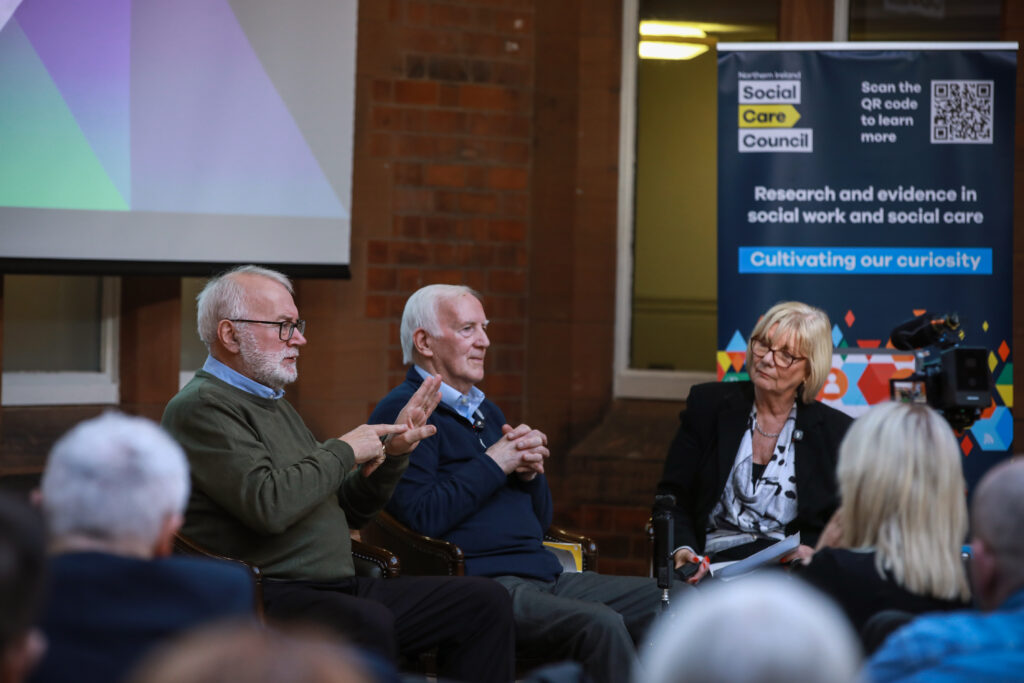
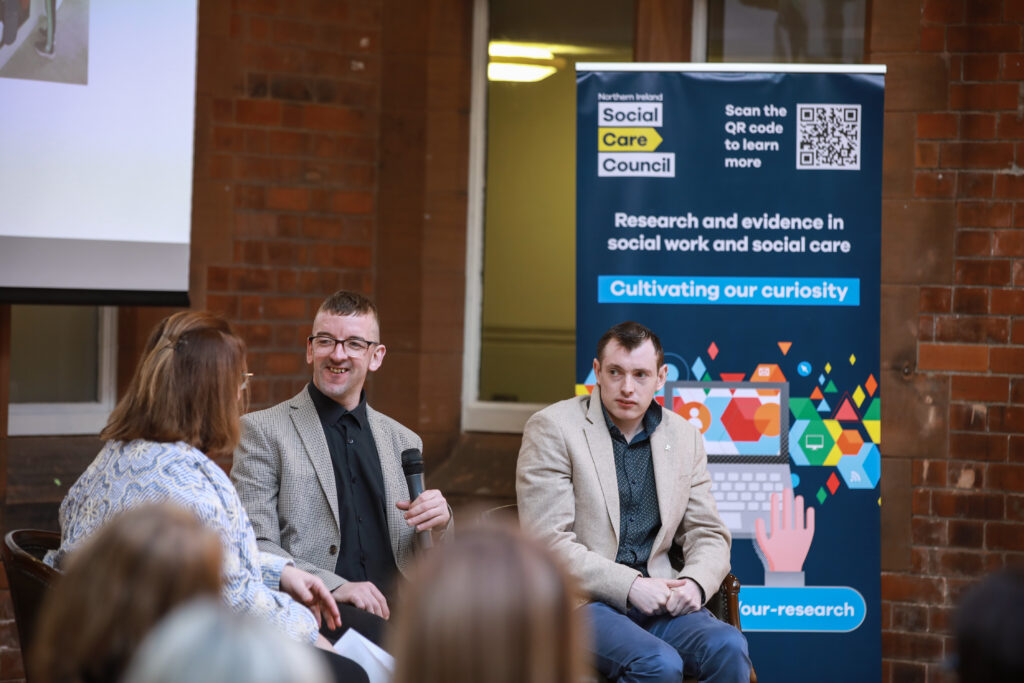
Interlude – a special conversation
The interlude at the conference is a special moment that stands out each year, to ground us in why social work and social care research is so important.
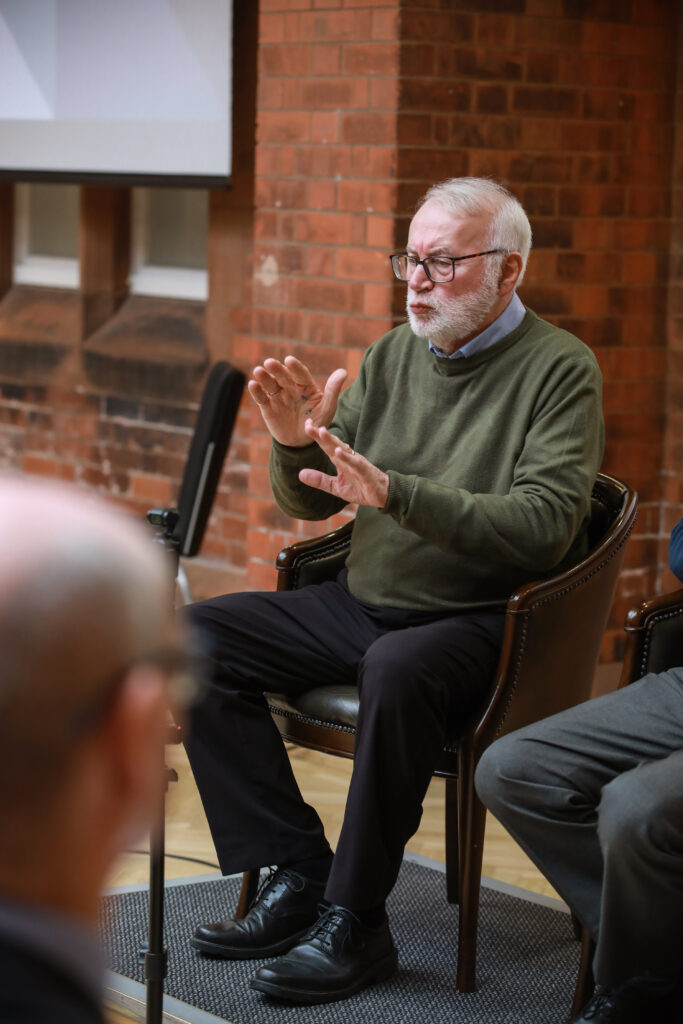
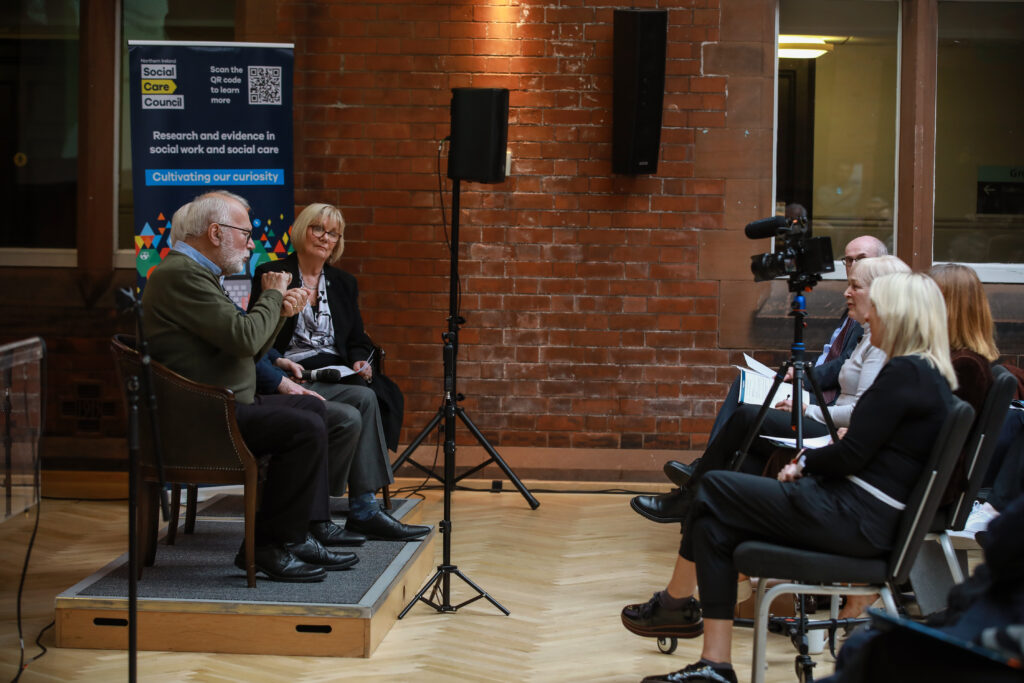
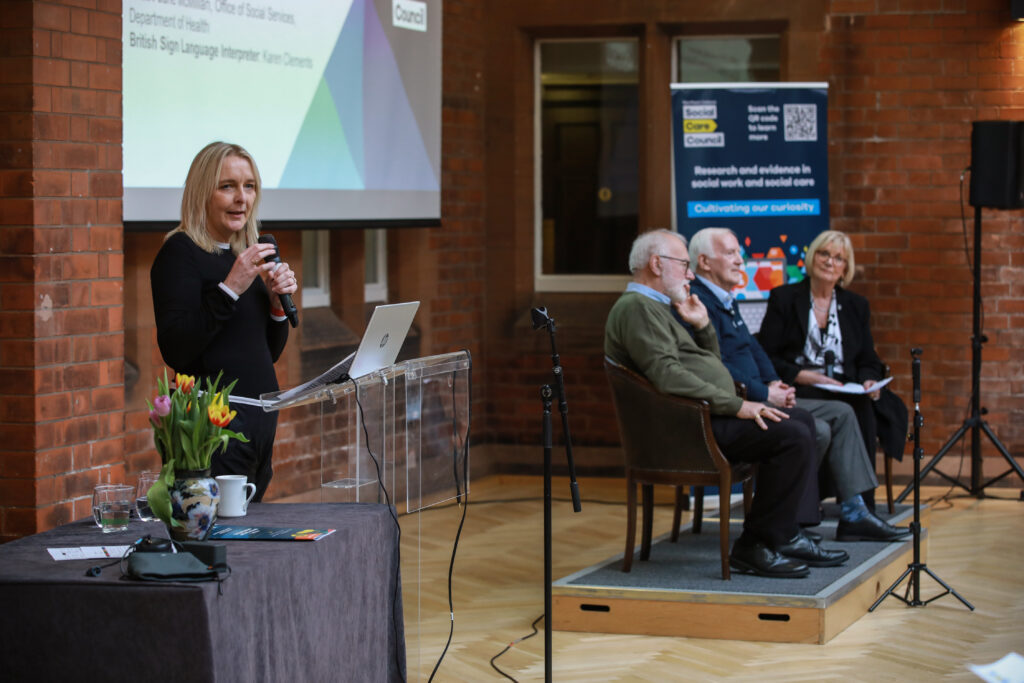
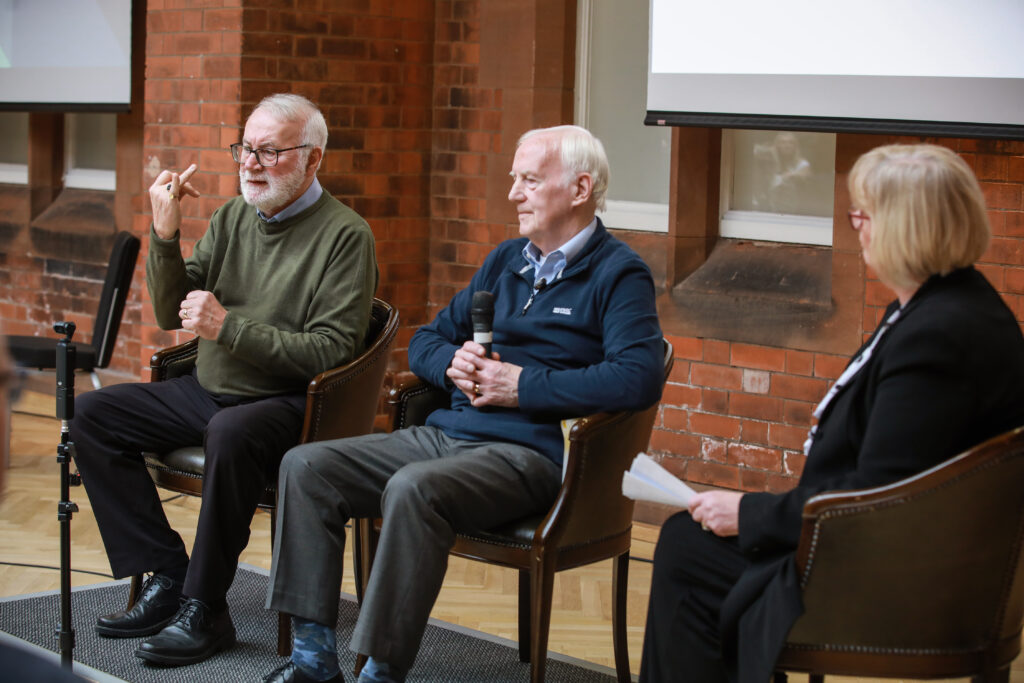
This year it was introduced by Jane McMillan, Office Social Services, Department of Health, and featured two men who together embody the essence of respected and compassionate leaders, whom both Jane had worked with for many years – Brian Symington (MBE) and John Carberry (MBE).
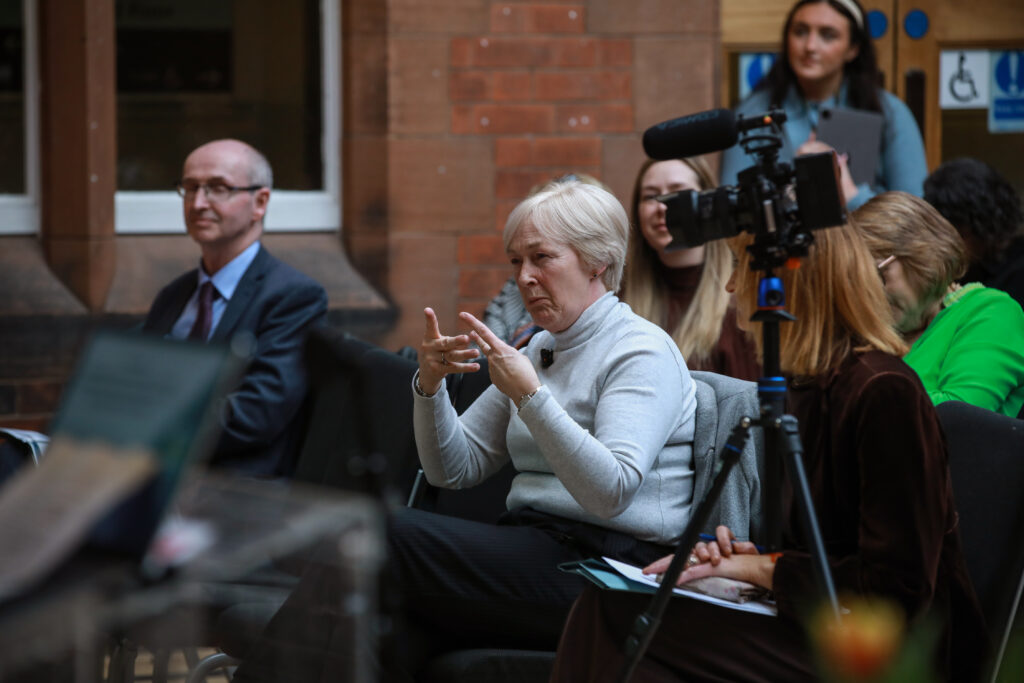
Roslyn Dougherty, Board member, Social Care Council Board (and who originally worked as a social worker for the deaf in Brian’s Team) did an amazing job as chat show host in interviewing Brian and John and keeping the conversation flowing – no mean task.
With such amazing personal and professional stories to share 30 minutes was never going to be enough. However, we got plenty of insight from John on his early life and what it was like for him as a child, becoming deaf through illness and having to move to away from his family to go to school in Dublin at a very young age. For Brian, we learned that his interest in football could have led him in another area, if it had been the case that he had suffered a severe injury, one of our football icons could have Brian Symington, and not just George Best.
Football’s loss was Northern Irelands gain and Brian has become a legend amongst the deaf and visually impaired and hearing community alike.
The icing on the cake, which Roslyn saved to the end of the interview, was to introduce John as a film star having recently stared alongside his wife Agnes in, “A Quiet Love – The six decades romance that defied divisions”. John met Agnes at a school for the deaf over 60 years ago.
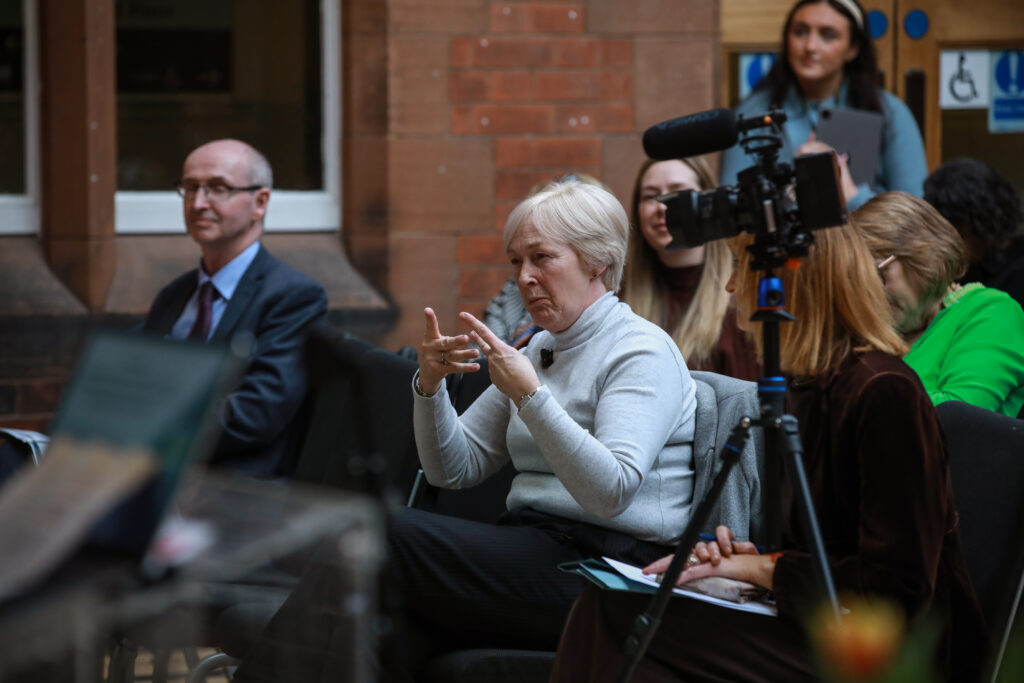
Below you can see this for yourself. The session was recorded and made accessible to the British Sign Language (BSL) and the Deaf signing community, with BSL provided by Karen Clements – and it is very much worth a watch so you can be inspired too.
Round up and what’s next – Anne McGlade
Anne McGlade Social Work and Social Care Research Lead, Social Care Council
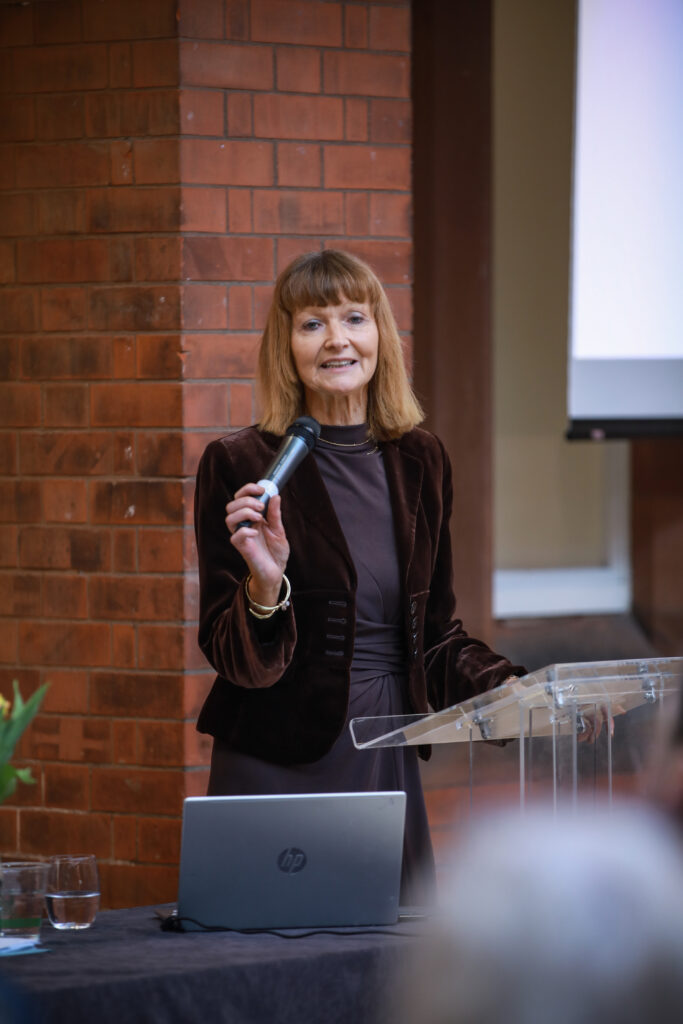
As Social Work and Care Research Lead at the Social Care Council, I want to pay tribute to everyone in the room, our inspiring presenters, chairs of sessions, delegates, awardees and those who helped in any way to support the studies presented. Research leadership is exactly about that we can all play a part. It is about practitioners, policy-makers, managers, those with lived experience and researchers working and presenting together to help create the necessary conditions for supporting getting evidence into practice.
Each year, I say I am impressed by the increasing interest, dedication and commitment by colleagues from Northern Ireland and the Republic of Ireland, as well as other parts of the United Kingdom, to attend and present at this conference. This year is no exception. Demand for places and applications to present continue to increase. We in the Social Care Council are very pleased to carry the responsibility for driving the strategic agenda. A task that we do working in partnership with others.
Personally, I also wish to acknowledge the support of colleagues within the Social Care Council. A huge thank you to everyone who played any part in the 2026 conference and a special thank you to Andriana Alkiviadou, whose ongoing commitment and incredible support are very much appreciated.
Reflecting on the day, it is important that we all take time to celebrate and reflect on our achievements for research and evidence within social work and social care.
Stay curious and open to new ideas.
Please find more of our research content by clicking here.
Comments from delegates and participants
“The conference was so well organised stimulating and a warm and welcoming atmosphere was created. It was a happy and exciting place to be. Great opportunities for networking, a terrific range of subjects delivered through an array of mediums which kept us on our toes and brains engaged all day. And it seemed to run with such ease, which requires some amount of work. Congratulations.”
“It was a lovely event well organised and as a delegate I felt looked after. The food was particularly good, not an easy take when you are catering for large numbers.”
“This was a wonderful event that helped feed my passion for developing social care and social work in NI”.
“I was able to benefit a student immediately by putting her in touch with the inspirational Noah Agbo whose presentation was thoughtful and very relevant”.
“Excellent variety of presentations. I liked the focus of the keynotes and getting us to think about the use of AI in our practice”.
Save the date: 14th Annual Social Work and Social Care Conference 2027.
Next year’s conference is planned for Wednesday 10th March 2027.
For more information and to stay up to date, click here. We can’t wait to celebrate with you again.
Photo gallery